


Cake Box Size Guide: Choosing the Right Fit for 4 to 12-Inch Cakes
Apr 06, 2026
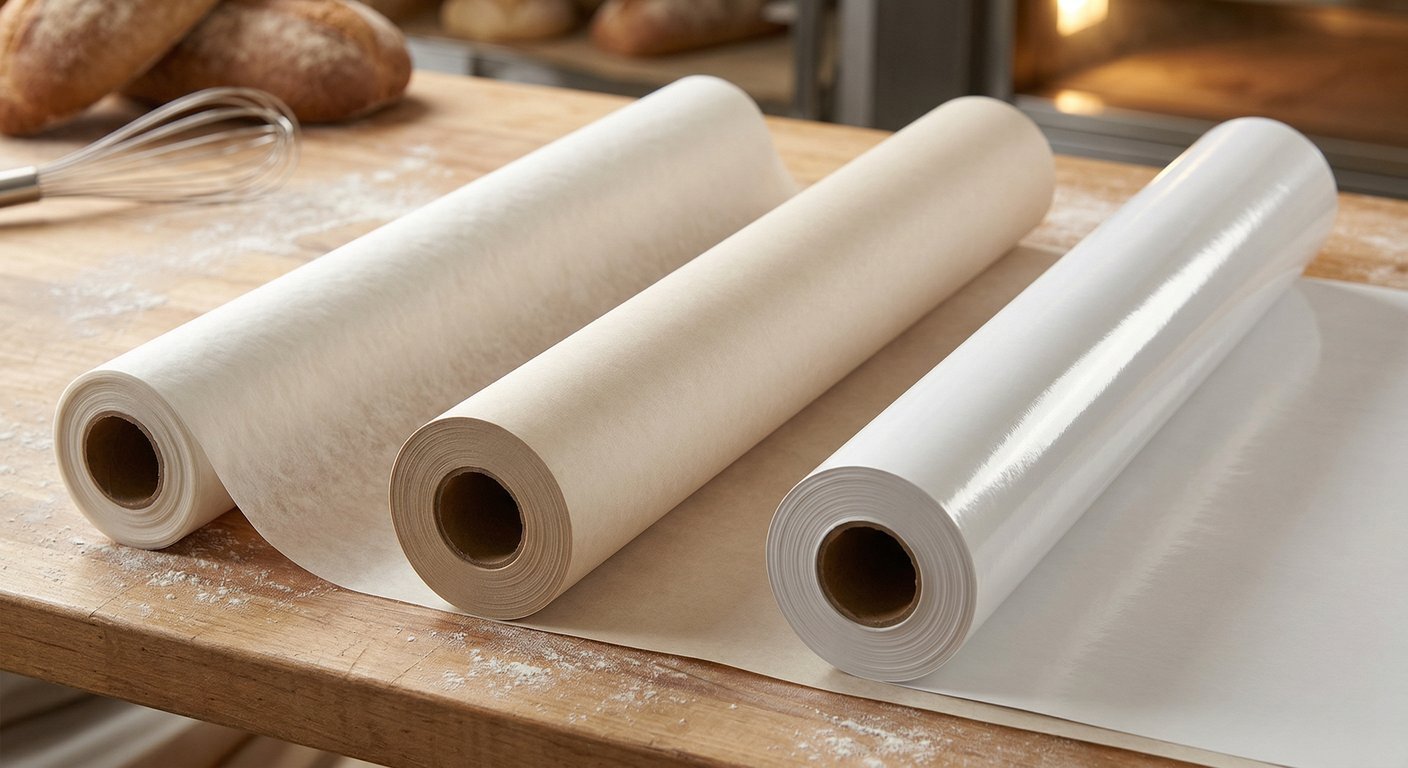
When selecting food packaging materials or outfitting a commercial kitchen, the ongoing debate of baking paper vs greaseproof paper and silicone paper frequently causes costly confusion. Many businesses mistakenly use these terms interchangeably, leading to ruined baked goods, compromised packaging integrity, and wasted budgets. Understanding the precise differences in their manufacturing processes, material composition, and non-stick capabilities is crucial for bakeries, restaurants, and food packaging distributors aiming to optimize both performance and cost.
To make an informed decision, it is essential to look at the technical definitions and manufacturing processes behind each type of paper. At a foundational level, all these papers start from wood pulp, but how that pulp is treated determines the final product’s characteristics.
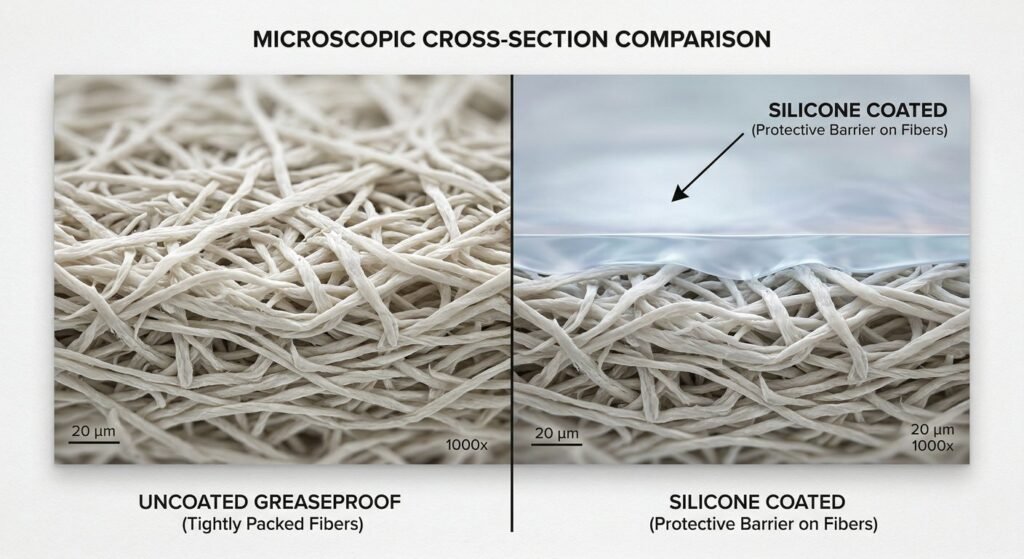
Greaseproof paper is produced by tightly refining the paper stock. The wood fibers are beaten extensively until they become crushed and highly hydrated. This intensive mechanical process creates a dense sheet with very low porosity. Because the fibers are packed so tightly, oils and fats cannot easily pass through. However, it is important to note that standard greaseproof paper does not have a specialized chemical coating. It relies entirely on the physical density of the cellulose fibers to resist grease.
Silicone paper, on the other hand, takes a standard paper base and applies a microscopic layer of polymerized silicone to one or both sides. This coating creates an exceptionally smooth, highly non-stick surface that can withstand extreme temperatures without degrading. Baking paper (often referred to as parchment paper) is generally a broader term that usually encompasses papers treated with either silicone or a sulfuric acid wash (quilon) to achieve both heat resistance and non-stick properties.