


The Complete Guide to Air Fryer Disposable Liners
Apr 03, 2026
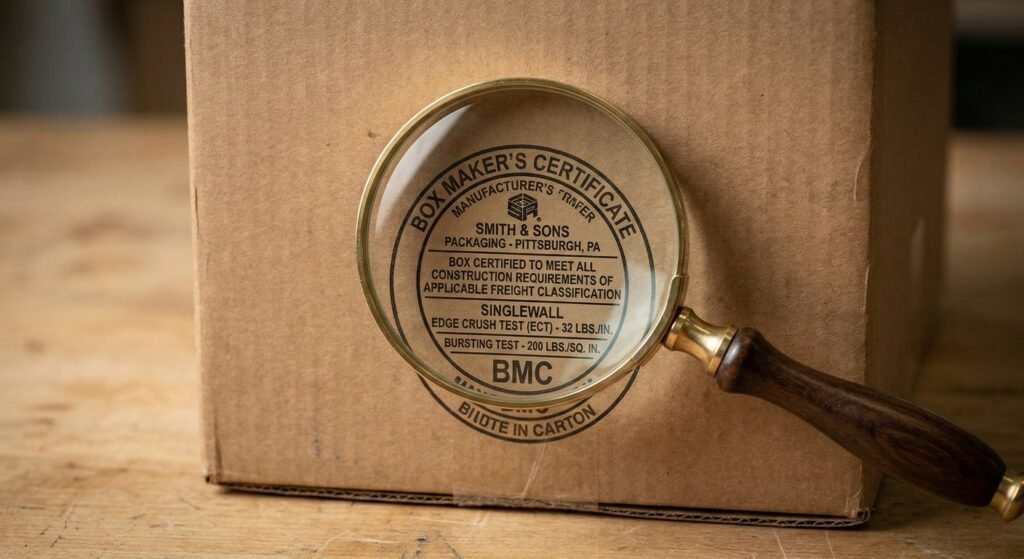
When navigating the complexities of modern corrugated packaging, understanding the nuances of ECT vs Burst Test is crucial for ensuring product safety and supply chain cost-efficiency. For decades, packaging engineers and logistics managers have relied on specific standardized testing methods to predict how a cardboard box will perform during transit. If a box is too weak, products get damaged, resulting in costly returns and compromised brand integrity. Conversely, over-engineering a box leads to unnecessary material costs and excessive environmental waste. By mastering the fundamentals of these two primary strength metrics, brands can optimize their packaging strategy for exactly how their products will be shipped and stored.
To properly protect your merchandise, we must first look at the scientific and historical differences between these two foundational packaging tests. They measure entirely different types of stress applied to corrugated fiberboard.
The Bursting Strength Test (Mullen Test)
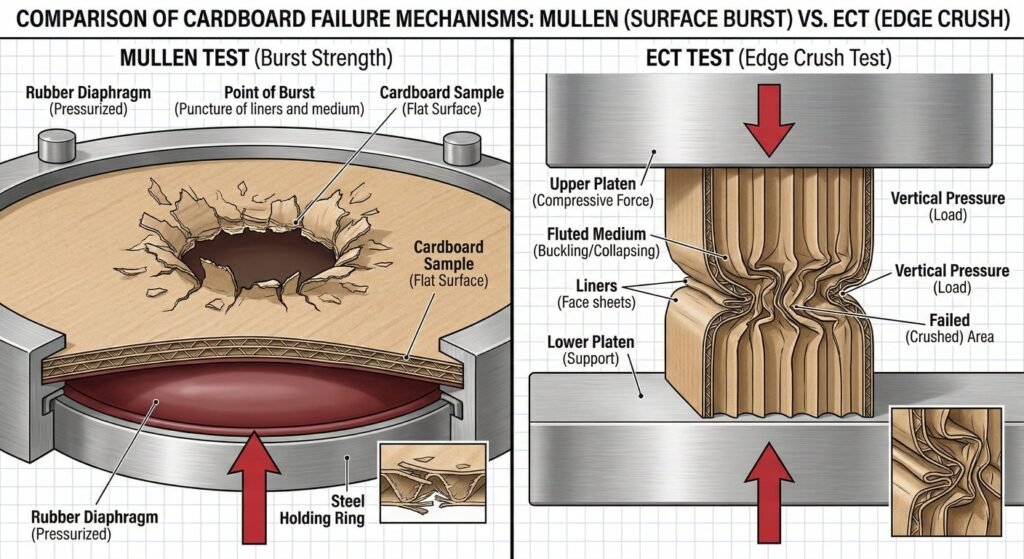
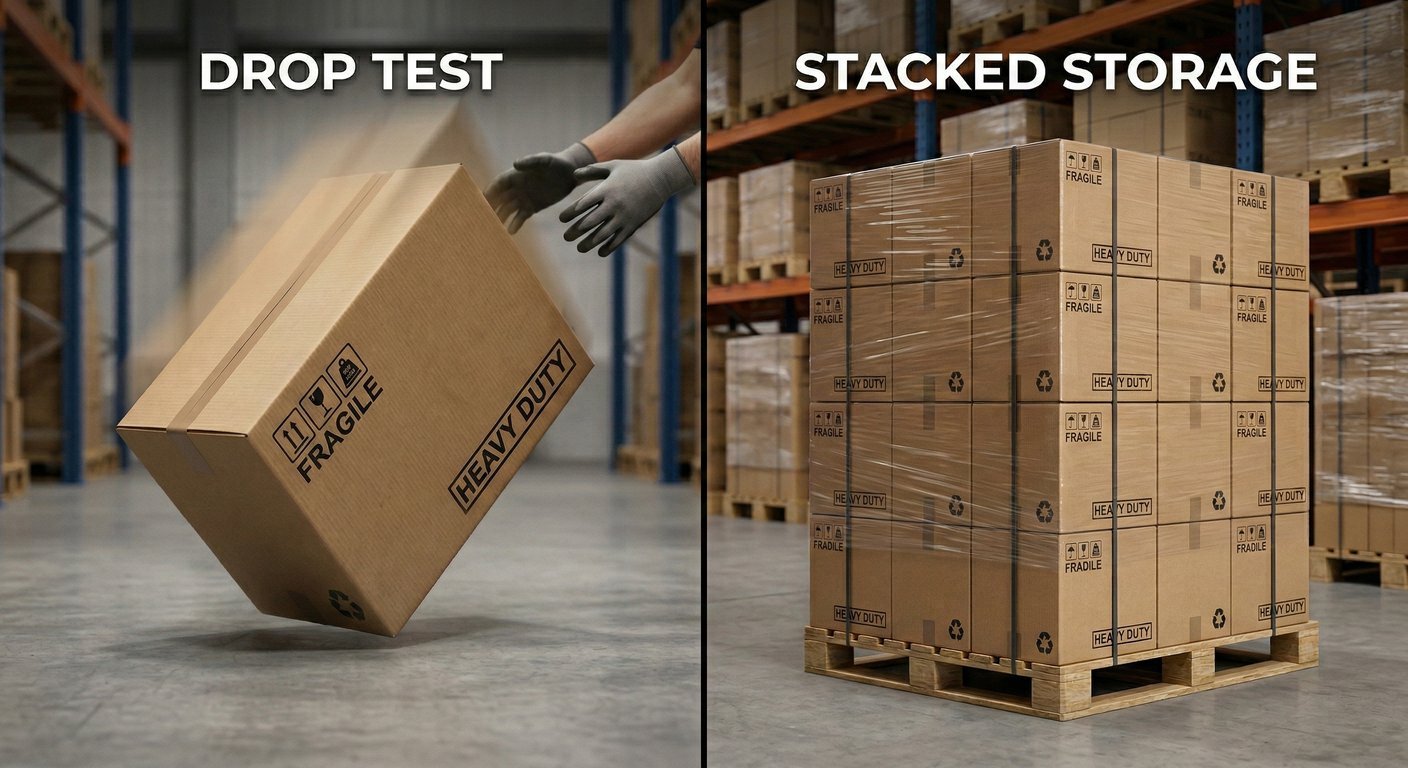
Historically, the Burst Test (often called the Mullen Test) was the industry standard. It measures the force required to puncture or rupture the face of the corrugated board. During this test, a rubber diaphragm is inflated against the flat side of the cardboard until it bursts open. The result is measured in pounds per square inch (psi). This metric is primarily concerned with containment: how well will the box protect its contents from rough handling, internal shifting, and external punctures when tumbling through a parcel delivery network?
The Edge Crush Test (ECT)
As supply chains evolved and palletized shipping became the dominant method of global freight, the industry needed a new standard. The Edge Crush Test was developed to measure the stacking strength of the board. In this test, a small sample of the corrugated board is compressed between two rigid platens on its edge until it buckles. The result is measured in pounds per lineal inch (lb/in). ECT directly correlates to a box’s theoretical Box Compression Test (BCT) value, predicting how much weight a box can withstand when stacked high on a warehouse pallet.