How to Prevent Soggy Takeaway Food: 5 Critical Strategies for Crispy Delivery
📅 Jan 03, 2026
👤 Cody Kang
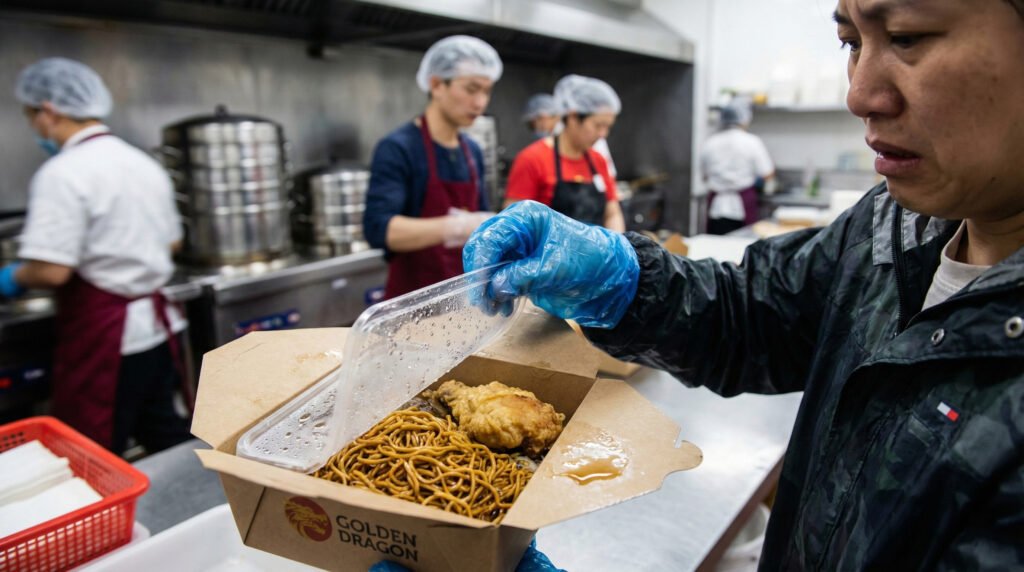
The increasing demand for takeaway and delivery services presents a significant challenge for restaurants and food businesses: how to prevent soggy takeaway food. Customer satisfaction hinges not just on delicious flavors, but also on the food arriving fresh, hot, and with its intended texture. Nothing disappoints a customer more than opening a container of once-crispy fries or fried chicken only to find it limp and unappetizing due to trapped moisture and condensation. This guide will delve into the technical solutions to maintain food quality from kitchen to customer.
In this guide, you will learn:
Why generic packaging fails to maintain food crispness during transit.
The scientific principles behind moisture management in food packaging.
Five critical design and material parameters essential to prevent soggy takeaway food.
How Gangda Packaging’s specialized solutions offer a robust answer to this industry-wide problem.
The importance of choosing certified, high-performance packaging partners.
1. The Common Market Trap: Why Generic Packaging Fails to Prevent Soggy Takeaway Food
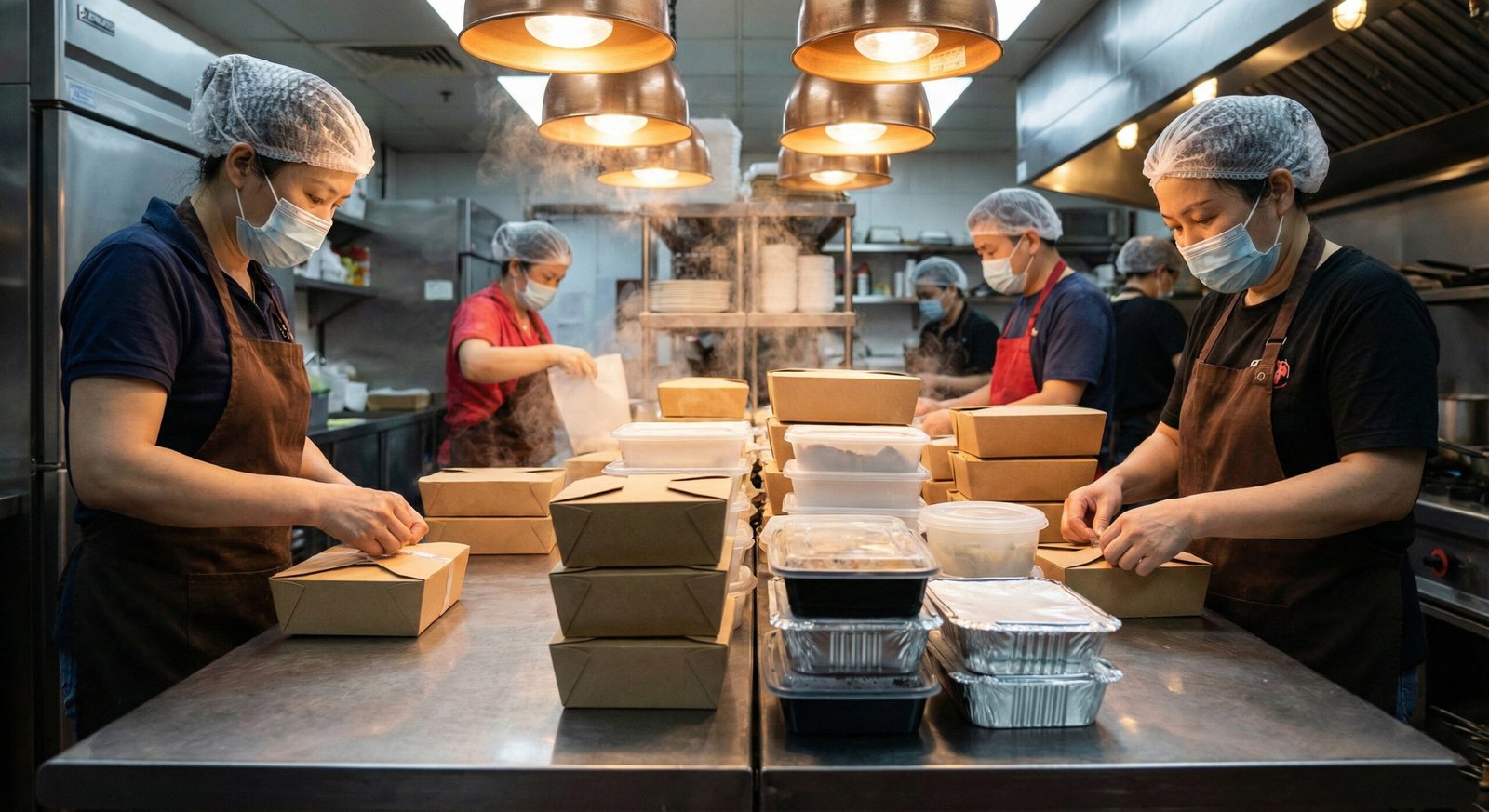
Many food businesses, in an effort to minimize costs, often opt for generic, off-the-shelf packaging solutions. While seemingly economical, this approach frequently leads to a critical problem: soggy takeaway food. Standard, non-ventilated containers, typically made from polystyrene or basic paperboard, are designed primarily for containment, not for preserving texture. They seal in heat, but inadvertently also trap steam and moisture released by hot food.
This trapped moisture, unable to escape, condenses on the cooler surfaces of the packaging and food itself, turning crispy textures into a mushy disappointment. This isn’t just an aesthetic issue; it can significantly impact taste, perceived freshness, and ultimately, customer loyalty. The economic fallout from negative reviews and lost repeat business far outweighs any initial savings on packaging.
Technical Root Cause: Condensation and Vapor Pressure
The root cause of soggy takeaway food lies in the physics of condensation. When hot food is sealed in an enclosed space, water vapor evaporates from its surface. As this hot, moist air comes into contact with the cooler interior walls of the packaging, it rapidly cools. This causes the water vapor to condense back into liquid droplets. More on condensation in food packaging. These droplets then re-deposit on the food, particularly on items with high surface area like fries or battered products, saturating them and destroying their crispness. Generic packaging lacks the essential features to manage this critical moisture transfer.
“The challenge isn’t merely to contain the food, but to create a micro-environment within the package that actively manages temperature, humidity, and airflow. Ignoring these scientific principles inevitably leads to compromised food quality and a poor customer experience. We call this ‘engineered freshness’.”
2. 5 Critical Strategies for Preventing Soggy Takeaway Food and Ensuring Optimal Crispness
Successfully delivering crispy food requires a multi-faceted approach, integrating material science, thoughtful design, and strategic operational practices. Here are five critical parameters that Gangda Packaging engineers prioritize to prevent soggy takeaway food.
1. Advanced Ventilation and Airflow Design
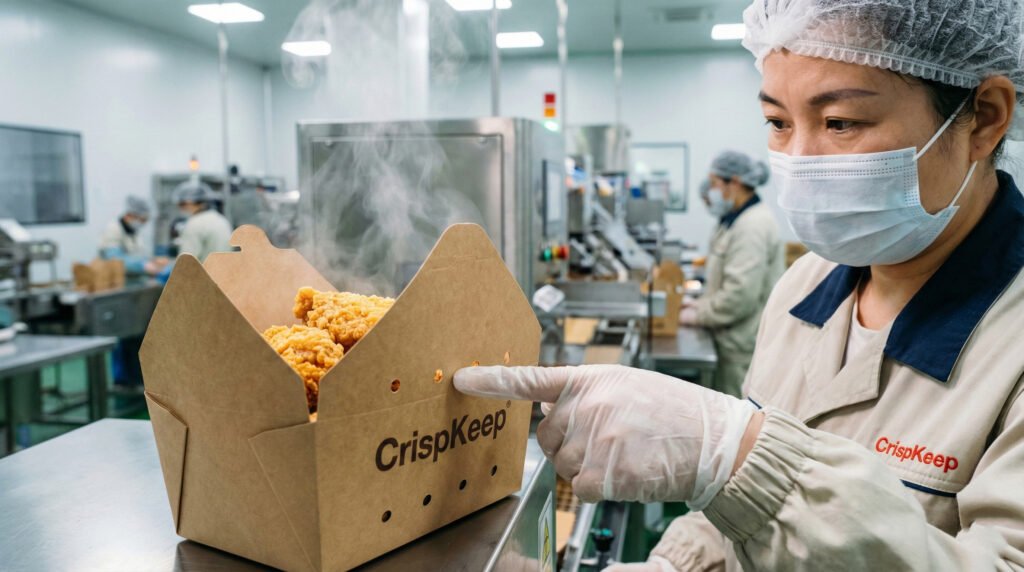
One of the most crucial elements in preventing soggy takeaway food is intelligent ventilation. This goes beyond simply punching a few holes; it involves carefully engineered vent patterns that allow excess steam to escape without causing significant heat loss or food spillage. Our Greaseproof & Hot Food Bags for example, are designed with specific micro-perforations or strategic opening designs that release steam while retaining enough heat to keep the food warm. For larger items like bread or pastries, Gangda Packaging’s Bakery & Window Bags feature breathable paper that allows moisture to dissipate, helping to keep crusts crispy.
The size, shape, and placement of vents are critical. Too large, and food cools rapidly; too small, and condensation still forms. Our engineers calculate the optimal vapor exchange rate for different food types to balance moisture release with temperature retention, ensuring your food arrives crisp and delicious.
2. Moisture-Resistant and Greaseproof Barriers
Beyond ventilation, the packaging material itself plays a pivotal role in preventing soggy takeaway food. Materials that can resist both external moisture (e.g., from ambient humidity) and internal moisture (grease and oil from the food) are essential. Standard paper or paperboard can quickly absorb grease and moisture, leading to structural degradation and unsightly stains. This compromises the integrity of the packaging and the food quality.
Gangda Packaging utilizes specialized materials like those found in our Greaseproof & Hot Food Bags. These feature an oil-resistant coating that prevents grease from seeping through, maintaining packaging aesthetics and structural integrity. Furthermore, select liners, like our Air Fryer Disposable Liners, leverage non-stick parchment properties, ensuring food doesn’t stick and any residual oils are contained. Our materials are rigorously tested to meet global standards like FDA and LFGB for direct food contact, ensuring safety alongside performance. According to FDA regulations, food contact materials must not impart harmful substances to food U.S. Food & Drug Administration.
3. Structural Integrity and Stacking Strength
The journey from kitchen to customer can be bumpy. Packaging must maintain its shape and protective qualities under varying conditions, including stacking in delivery bags, handling, and temperature fluctuations. Weak or flimsy packaging can collapse, leading to food compression, spoilage, and further condensation points. To effectively prevent soggy takeaway food, packaging needs to be robust.
Our solutions, ranging from Corrugated & Shipping Boxes to specialized paper containers, are engineered for structural integrity. We use food-grade cardstock and multi-layer designs that provide excellent rigidity and stacking strength. This ensures that the internal airflow systems remain functional and the food isn’t crushed, preserving its intended texture and presentation. This structural resilience is a hallmark of quality, reflecting our adherence to strict ISO 9001 standards in manufacturing processes. As defined by ISO standards, quality management systems ensure consistent product performance International Organization for Standardization.
4. Material Selection for Breathability and Insulation
The choice of base material critically impacts how well packaging can prevent soggy takeaway food. While plastic containers can trap moisture, certain paper-based materials offer natural breathability. However, not all paper is created equal. We carefully select papers with optimal porosity for steam release while offering enough insulation to keep food warm.
For example, a high-quality, dense kraft paper, often used in our Standard Carrier Bags, provides a better balance of breathability and insulation than a thin, uncoated paper. For hotter, oilier foods, a multi-layer composite with a dedicated barrier is often necessary. These composites are engineered to prevent moisture migration while retaining heat. Our commitment to FSC certified materials ensures that even our high-performance papers are sustainably sourced, aligning with modern environmental demands.
5. Separation and Compartmentalization
Often, meals consist of multiple components, some crispy, some saucy. Direct contact between these elements is a recipe for soggy takeaway food. Effective compartmentalization is a simple yet powerful strategy to mitigate this. By separating components, especially those prone to releasing moisture (like sauces or steamed vegetables) from crispy items (like fried chicken or fries), cross-contamination of moisture is avoided.
While not always a feature of the primary container, Gangda Packaging offers various inserts and secondary packaging options that facilitate this separation. This might include small Greaseproof & Hot Food Bags for fries placed inside a larger carrier, or custom-designed inserts within a box. This thoughtful design ensures each food item retains its optimal texture and temperature.
3. How Gangda Packaging’s Advanced Solutions Help Businesses Prevent Soggy Takeaway Food
At Gangda Packaging, we understand that combating soggy takeaway food is a critical differentiator for businesses in the competitive food industry. As a global B2B manufacturer, we leverage our deep technical expertise and state-of-the-art facilities to provide tailored solutions that ensure your food arrives exactly as intended: crispy, hot, and delicious. Our process is built on precision, quality, and an unwavering commitment to food safety and sustainability.
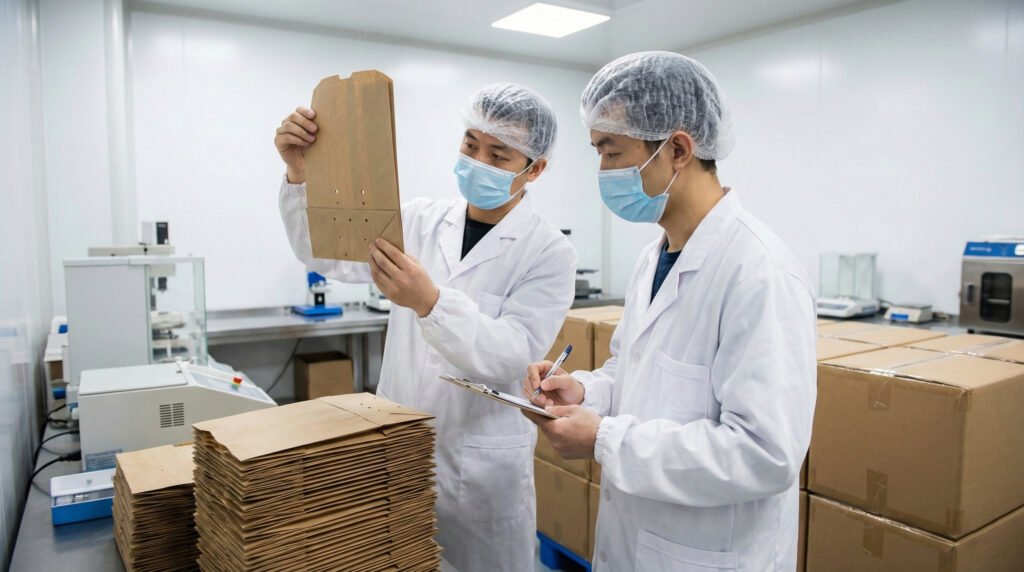
Material Engineering & Testing: Our R&D team meticulously selects and develops materials with optimal properties for moisture control. This includes advanced greaseproof papers with specialized coatings and breathable paperboards. Each material undergoes rigorous testing in our labs for performance metrics like oil resistance, water vapor transmission rate (WVTR), and thermal insulation. These tests adhere to international standards such as BRCGS and LFGB, ensuring every batch helps to prevent soggy takeaway food.
Precision Manufacturing & Ventilation: With 20+ production lines and a dust-free workshop, we utilize advanced manufacturing techniques to create precisely engineered ventilation systems. This includes micro-perforations, laser-cut vents, and intelligently designed closures that allow steam to escape while minimizing heat loss. Our capability for custom printing (OEM/ODM) allows integration of these functional designs seamlessly with your brand aesthetics, without compromising performance.
Food Safety Certifications: All our direct food-contact products, including Baking Liners & Molds and Greaseproof & Hot Food Bags, are manufactured under stringent quality control. We hold certifications such as FDA, FSC, LFGB, ISO 9001, BRCGS, and BSCI. These certifications are not just stamps of approval; they reflect our comprehensive approach to safety, quality, and ethical production, providing peace of mind that our solutions will prevent soggy takeaway food safely.
Custom Design & Prototyping: We don’t believe in one-size-fits-all. Our packaging engineers work closely with clients to understand their specific food items, cooking methods, and delivery logistics. We offer custom design and prototyping services to develop bespoke packaging solutions that precisely address the unique challenges of different cuisines and meal components. This tailored approach is key to consistently preventing soggy takeaway food.
Quality Control & Traceability: Every product leaving our factory undergoes a multi-stage quality control process. From raw material inspection to finished product verification, we ensure consistency and adherence to specifications. Our comprehensive traceability system means we can track every component, ensuring accountability and continuous improvement in our mission to help you prevent soggy takeaway food.
4. Conclusion
The battle against soggy takeaway food is a complex one, but it is a battle that can be won with the right packaging engineering. Generic solutions often fall short, sacrificing food quality for perceived cost savings. However, the long-term impact on brand reputation and customer loyalty far outweighs these initial savings. By focusing on advanced ventilation, robust moisture barriers, structural integrity, smart material selection, and effective compartmentalization, businesses can ensure their food arrives fresh, crispy, and delightful.
At Gangda Packaging, we combine decades of manufacturing experience with cutting-edge material science and precise engineering to deliver solutions that truly make a difference. Our certified, high-performance packaging is designed to safeguard your food’s quality and your brand’s reputation. Don’t let your culinary creations be ruined by inadequate packaging.
Contact us for a custom quote or free sample kit to experience the Gangda Packaging difference. Let our engineers help you design the perfect packaging solution to consistently prevent soggy takeaway food and delight your customers.