


The Complete Guide to Air Fryer Disposable Liners
Apr 03, 2026

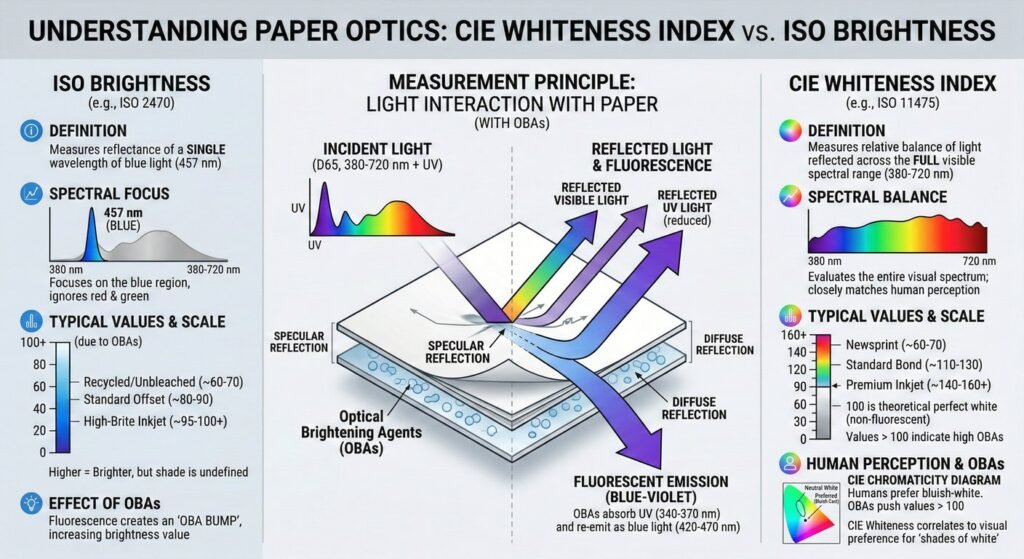
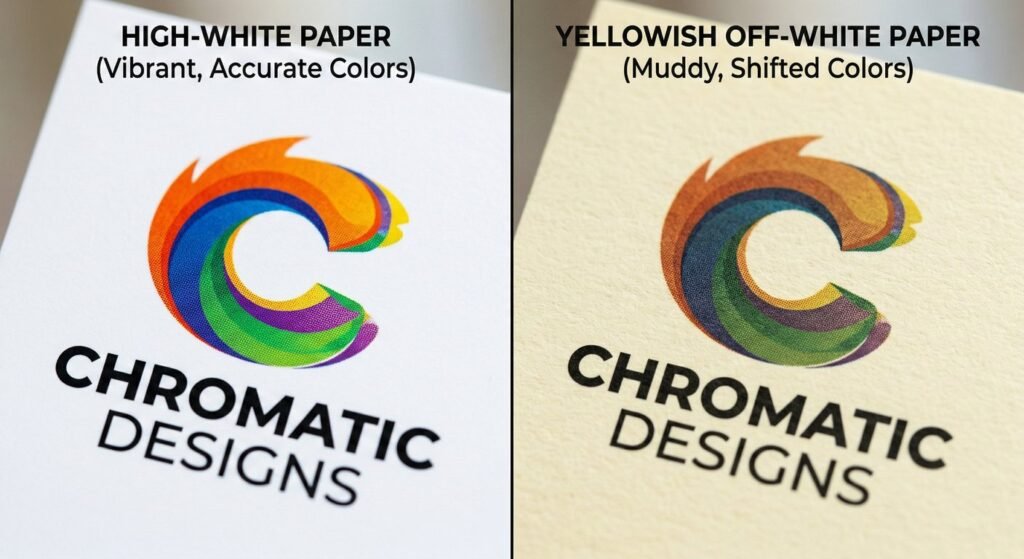
When designing premium packaging, color accuracy is paramount. You might have the perfect CMYK codes on your screen, but if the substrate is off, your colors will look muddy or shifted. This is where understanding paper whiteness becomes essential. It is not just about how “white” a sheet looks to the naked eye; it is a measurable optical property that dictates how light interacts with the printed ink, ultimately defining the visual impact of your final product.
In the printing and packaging industry, paper whiteness refers to the paper’s ability to reflect all wavelengths of visible light equally across the spectrum. Unlike brightness—which only measures the reflection of blue light at a specific wavelength (457 nanometers)—whiteness encompasses the entire visual spectrum. To standardize this, the industry relies on the CIE (International Commission on Illumination) index. Papers with a higher CIE rating appear cooler and brighter. To learn more about the detailed optical physics, you can explore the scientific definition of Whiteness and how human vision perceives it.