
Complete Guide to the 8 Types of Baking Liners
Technical Guide

Complete Guide to the 8 Types of Baking Liners

📅 Apr 01, 2026 👤 Cody Kang

When running a commercial bakery, restaurant, or even a home kitchen, sticky pans and ruined pastries are a baker’s worst nightmare. The solution lies in choosing the right barrier between your food and the pan. Understanding the different types of baking liners is crucial for preventing stuck food, maintaining expensive baking equipment, and ensuring perfectly formed baked goods every single time. However, with so many options on the market, it is easy to confuse wax paper with parchment, or misunderstand the heat limits of greaseproof sheets.

1. Understanding the Core Types of Baking Liners

To make informed purchasing decisions for food packaging and preparation, we must first break down the fundamental variations of baking papers. Each serves a highly specific purpose based on its coating and manufacturing process.

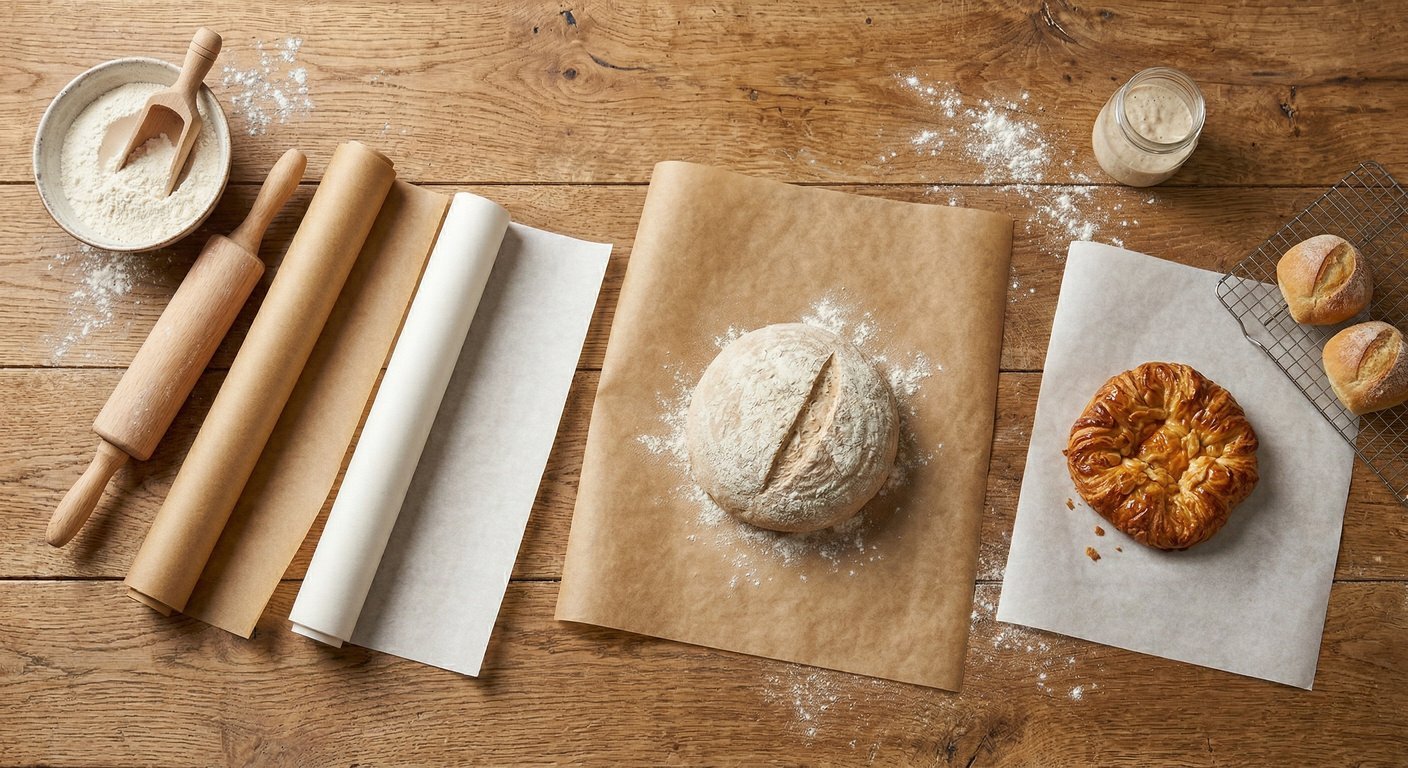
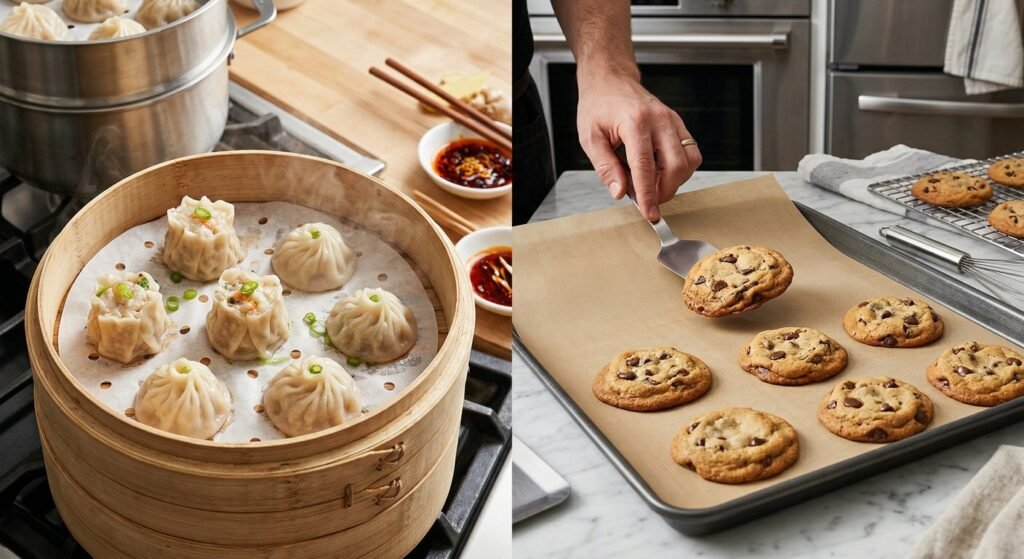
  • Baking Paper / Parchment Paper: Often considered the gold standard in bakeries, this paper is treated to be both non-stick and heat-resistant (usually up to 220°C or 428°F). While many people use the term interchangeably, true parchment paper is treated with an ultra-thin layer of silicone or sulfuric acid during manufacturing to give it high density, heat resistance, and non-stick properties.
  • Greaseproof Paper: Unlike parchment, greaseproof paper does not have a silicone coating. It is tightly woven to prevent fats and oils from seeping through, making it excellent for wrapping hot foods or lining trays for low-temperature applications, but it is not non-stick for baking cakes.
  • Wax Paper: This paper is coated on both sides with food-grade paraffin or soybean wax. It is exceptionally moisture-proof and non-stick when cold, but it is strictly for room-temperature or cold applications (like wrapping sandwiches or chilling dough). It will melt and smoke if put in the oven.
  • Cake Paper (Standard Baking Cases): Usually made from corrugated or pleated greaseproof paper, these are pre-formed into cups for muffins and cupcakes. They provide structure and a hygienic barrier for individual portions.