Why Premium Coffee Filter Paper Quality is Critical: 7 Factors to Avoid Catastrophic Brews
📅 Jan 01, 2026
👤 Cody Kang
Every coffee enthusiast knows that a great cup of coffee begins long before the first sip. It starts with the beans, the grind, and, crucially, the filter. For businesses in the coffee industry, from roasters to cafes to packaging distributors, understanding premium coffee filter paper quality is not just an advantage—it’s a necessity. Low-grade filters can ruin batches, disappoint customers, and ultimately tarnish a brand’s reputation. This comprehensive guide, informed by our expertise as packaging engineers, delves into the essential factors that define superior filter paper and how choosing the right supplier, like Gangda Packaging, ensures consistency and excellence.
In this guide, you will learn:
Why generic coffee filter paper often fails to meet industry standards.
The key technical parameters that differentiate premium from subpar filters.
How specific material properties directly impact flavor and brewing efficiency.
The rigorous quality control measures that guarantee superior filter performance.
How partnering with a certified manufacturer like Gangda Packaging can safeguard your brand.
1. The Common Market Trap: Understanding Subpar Coffee Filter Paper Quality
The market is flooded with coffee filter paper options, and for an untrained eye, they might all look similar. However, beneath the surface lies a stark difference in premium coffee filter paper quality. Many low-cost manufacturers cut corners, leading to products that might save a few cents initially but cost significantly more in damaged reputation and product recalls. This common market trap catches businesses unaware, leading to frustrating brewing failures and inconsistent coffee taste.
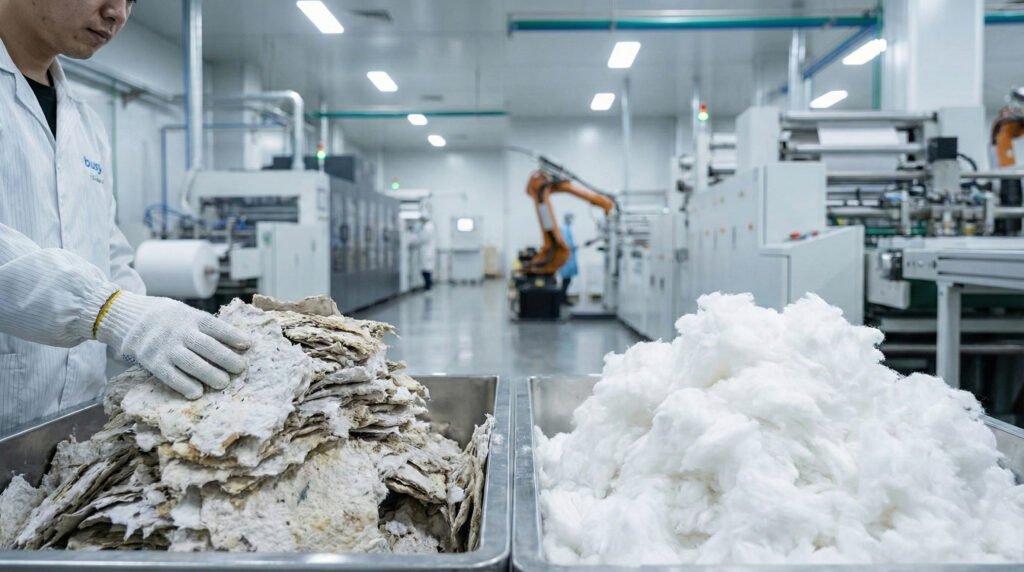
Generic filter papers often suffer from poor material sourcing. They might use recycled fibers without proper purification, leading to residues or off-odors that directly transfer to the coffee. Such filters can introduce a ‘papery’ or even ‘chemical’ taste, completely masking the nuanced flavors of a carefully roasted bean. Imagine a premium single-origin coffee being brewed through a filter that imparts an unpleasant aftertaste—a catastrophic outcome for any coffee brand aiming for excellence.
“The true cost of a cheap filter paper isn’t measured in its purchase price, but in the lost customer loyalty and the degradation of the coffee experience. As engineers, we understand that quality begins at the molecular level of the fibers.”
These issues often stem from a lack of stringent quality control and a fundamental misunderstanding of the delicate balance required for effective filtration. Without proper investment in raw materials and manufacturing processes, achieving true premium coffee filter paper quality becomes impossible.
2. 7 Critical Parameters Defining Premium Coffee Filter Paper Quality
Differentiating between a basic filter and a truly premium product requires a technical understanding of its core properties. Here are the seven critical parameters that define premium coffee filter paper quality:
Material Composition: The Foundation of Pure Brews
The starting point for any high-quality filter paper is its material composition. Inferior products often rely on recycled fibers or blends that may contain impurities, bleaches, or dyes that compromise both taste and safety. These contaminants can leach into the brewed coffee, introducing unwanted flavors or posing health risks.
Gangda Packaging’s Standard: We prioritize virgin wood pulp or sustainable long-fiber plant pulps like Abaca. This commitment ensures that our filters are free from harmful chemicals, heavy metals, and odors. Our materials are selected not only for their purity but also for their fiber length and strength, which contribute significantly to the filter’s overall integrity and filtration performance. This focus on pure, unadulterated cellulose is fundamental to premium coffee filter paper quality.
GSM and Thickness: Strength and Flow Control
Grammage (GSM – Grams per Square Meter) directly correlates with the filter paper’s thickness and density. This parameter dictates the filter’s durability, resistance to tearing, and critically, its water flow rate and filtration efficiency.
Low-End Market Standard: Filters often range from 20-26 GSM. These ultra-thin papers are prone to tearing, especially with pressure brewing methods like the AeroPress. A ruptured filter means coffee grounds in the cup, a significant flaw in premium coffee filter paper quality.
Gangda Factory Standard: We engineer our filters with a GSM range typically from 40-60 GSM, and even higher for specialized applications like Chemex or cold brew. This optimized thickness provides superior wet strength and durability, preventing blowouts even under significant pressure. Thicker papers, while potentially slowing the flow slightly, ensure a more consistent and even extraction, contributing to a cleaner, brighter cup.
Porosity and Pore Size: Precision in Filtration
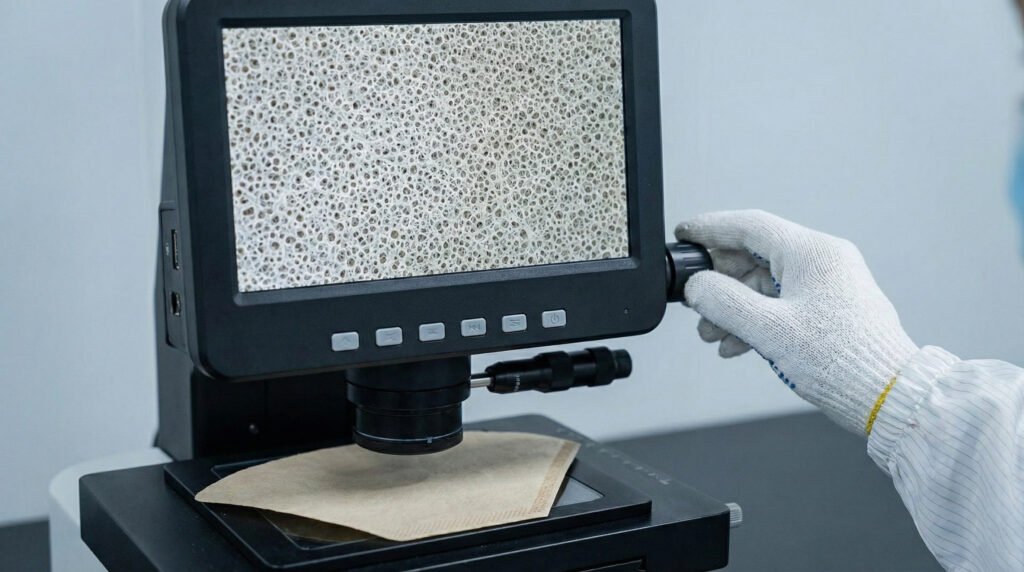
Porosity refers to the size and distribution of microscopic pores within the filter paper. This parameter is crucial as it determines what passes through the filter—water, desired flavor compounds, and oils—and what is retained, primarily coffee fines and undesirable sediments.
Low-End Market Standard: Inconsistent porosity or overly large pore sizes are common. This leads to inefficient filtration, allowing too many fine particles into the brew, resulting in a muddy, gritty cup. Such filters fail to deliver the clarity expected from premium coffee filter paper quality.
Gangda Factory Standard: Our advanced manufacturing processes ensure precise control over pore size distribution, typically targeting an optimal range of 20-30 microns. This meticulous engineering captures unwanted coffee grounds and a portion of bitter oils, while allowing desirable aromatic compounds to pass through. The result is a consistently clear, balanced, and flavorful coffee, free from sediment.
Wet Strength: Durability Under Pressure
Wet strength is the filter paper’s ability to resist tearing or breaking when saturated with hot water and laden with coffee grounds. This is arguably one of the most vital attributes for preventing brewing mishaps.
Low-End Market Standard: Filters with insufficient wet strength will soften, sag, or tear mid-brew, leading to grounds overflowing or leaking into the server. This is a common and highly frustrating failure point that detracts from any claim of premium coffee filter paper quality.
Gangda Factory Standard: We incorporate specialized treatments during manufacturing to significantly enhance wet strength, typically involving minute amounts of food-safe stabilizing resins. This ensures our filters maintain their structural integrity even under the weight of saturated coffee grounds and hot water, guaranteeing reliable performance throughout the brewing cycle. Our commitment to robust design ensures a flawless brewing experience every time.
Bleaching Methods: Flavor Neutrality vs. Chemical Taint
The bleaching process affects the filter’s color, potential residual chemicals, and its impact on coffee flavor. The goal is to remove natural paper tastes without introducing new ones.
Low-End Market Standard: Cheap or inefficient bleaching methods, sometimes involving elemental chlorine, can leave behind chemical residues. These residues can impart noticeable ‘papery,’ ‘muddy,’ or even ‘chemical’ notes to the coffee, destroying the intrinsic flavor profile. This significantly compromises premium coffee filter paper quality.
Gangda Factory Standard: We predominantly use Totally Chlorine Free (TCF) or Elemental Chlorine Free (ECF) oxygen-bleaching processes. These advanced methods effectively remove natural paper compounds and impurities without leaving behind flavor-altering residues. The result is a truly flavor-neutral filter that allows the coffee’s inherent notes to shine through, providing a cleaner and brighter taste experience. Even for our unbleached options, rigorous rinsing ensures a neutral taste.
Food Contact Compliance: Non-Negotiable Safety
Ensuring the filter paper is safe for direct food contact is non-negotiable. It must not release any harmful substances into the coffee.
Low-End Market Standard: Many generic filters lack proper certification or fail to meet international food safety standards. They may contain undeclared harmful substances or unsafe additives, posing serious health risks to consumers. This deficiency is a critical red flag when assessing premium coffee filter paper quality.
Gangda Factory Standard: All Gangda Packaging paper products, including our coffee filters, adhere strictly to global food contact material regulations. We hold multiple certifications, including FDA, LFGB, ISO 9001, BRCGS, and BSCI, which attest to our rigorous safety and quality management systems. Our commitment ensures that our filters are free from harmful residues and safe for direct contact with food. This compliance is a cornerstone of our premium coffee filter paper quality. According to FDA regulations, materials intended for food contact must undergo stringent testing to ensure safety.
In today’s market, premium coffee filter paper quality extends beyond mere functionality to include environmental responsibility and ethical sourcing.
Low-End Market Standard: Sustainability is often an afterthought or entirely neglected. Products may lack certifications, indicating potentially irresponsible sourcing or manufacturing practices.
Gangda Factory Standard: We are deeply committed to sustainable practices. Our products can be supplied with FSC (Forest Stewardship Council) certification, ensuring the paper fibers come from responsibly managed forests. This commitment aligns with our broader environmental stewardship and offers an additional layer of assurance to our clients. Choosing FSC-certified filters demonstrates a brand’s dedication to environmental responsibility. Learn more about FSC principles.
Feature
Generic Standard (Low-End)
Gangda Factory Standard (Premium Coffee Filter Paper Quality)
3. Achieving Premium Coffee Filter Paper Quality: Gangda’s Factory Solution
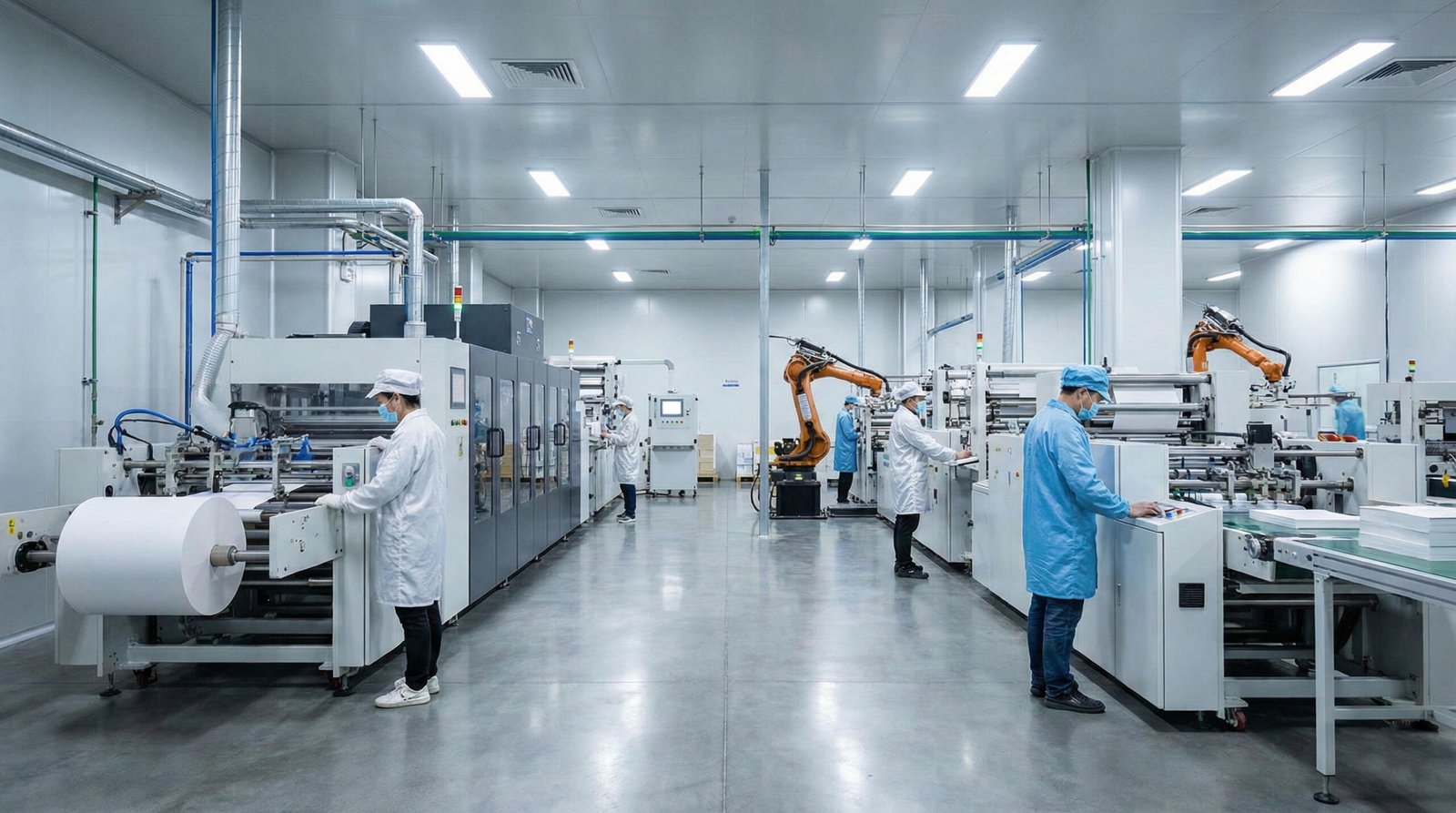
At Gangda Packaging, our role as a global B2B manufacturer means we understand the critical nuances of achieving premium coffee filter paper quality at scale. Our factory is specifically engineered to meet these demands, integrating advanced technology with stringent quality control.
Ensuring Consistent Premium Coffee Filter Paper Quality Through Advanced Manufacturing
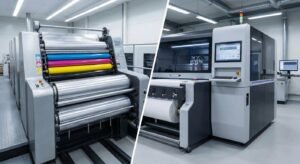
Our manufacturing process is a testament to our commitment to excellence. We leverage over 20 production lines dedicated to paper products, ensuring high-volume capacity without compromising on detail. Each line operates within a dust-free workshop environment, a critical factor for direct food-contact products like coffee filters. This controlled environment prevents contamination, maintaining the purity and hygiene essential for premium coffee filter paper quality.
Our quality control (QC) protocols are robust and multi-layered:
Raw Material Inspection: Every batch of virgin pulp undergoes rigorous testing for purity, fiber length, and absence of contaminants before entering production. This proactive step eliminates potential issues from the outset.
In-Process Monitoring: Automated sensors continuously monitor critical parameters like GSM, thickness, and porosity throughout the production run. Any deviation triggers immediate adjustments, ensuring consistent quality.
Wet Strength Testing: Samples from each batch are subjected to extreme wet strength tests, simulating actual brewing conditions to guarantee integrity under pressure.
Sensory Evaluation: Our QC team conducts routine sensory evaluations to ensure the filter paper is entirely flavor-neutral, preventing any unwanted paper taste from transferring to the coffee.
Certification Adherence: We meticulously document and audit our processes to ensure continuous compliance with international standards such as ISO 9001 for quality management. This certification signifies our systematic approach to maintaining premium coffee filter paper quality. Learn more about the ISO 9001 Standard.
Custom Printing (OEM/ODM) Quality: For clients requiring custom branding, our OEM/ODM capabilities include food-grade soy inks and precision printing, ensuring logos and designs are sharp, vibrant, and safe for contact.
Real-World Impact: Enhancing Brews with Gangda’s Filter Paper
Consider a major coffee roaster facing inconsistent brew quality due to subpar filter paper from a previous supplier. Grounds were occasionally escaping into cups, leading to customer complaints and a damaged reputation. Their previous filters, while cheap, had poor wet strength and inconsistent pore distribution, failing to provide the premium coffee filter paper quality required for their high-volume operations.
After switching to Gangda Packaging’s custom-engineered filters, the roaster experienced an immediate and significant improvement. Our filters, designed with an optimal 50 GSM and enhanced wet strength, completely eliminated filter blowouts and escaped grounds. The precise porosity ensured a consistently clear, sediment-free brew, allowing the nuanced flavors of their specialty beans to truly shine. This shift not only restored customer confidence but also streamlined their operations by reducing waste and improving efficiency, proving the tangible benefits of investing in premium coffee filter paper quality.
4. Conclusion
The pursuit of the perfect cup of coffee is an art and a science, and at its heart lies the often-overlooked hero: the coffee filter paper. For businesses, compromising on premium coffee filter paper quality is a gamble that can undermine product integrity, customer loyalty, and brand reputation. As Senior Packaging Engineers, we emphasize that true quality is built on meticulous material selection, advanced manufacturing processes, and unwavering adherence to international safety and sustainability standards.
Gangda Packaging stands as a trusted global partner, offering not just products, but engineered solutions that ensure your coffee filter paper consistently meets the highest benchmarks for performance, safety, and environmental responsibility. We are committed to helping you elevate every brew, protect your brand, and delight your customers.
Don’t let subpar filter paper compromise your coffee experience. Contact our expert engineers today for a custom quote or to request a free sample kit, and discover the difference that genuine premium coffee filter paper quality can make. Contact us for a partnership built on quality and trust.