



Book Style Box Packaging Guide
Jul 28, 2026

Premium Packaging Solutions

Retail & Food Bags
In the global beverage packaging industry, providing the correct brewing accessories is as critical as the coffee itself. For distributors and coffee shop chains, understanding the coffee filter paper size chart is not just about logistics—it’s about ensuring cup consistency and preventing operational failures. While many assume filter sizes are a universal standard, the reality is a complex landscape of varying geometries and capacities. Choosing the wrong size leads to more than just a mess; it often results in poor flavor profiles caused by overflow or uneven saturation.
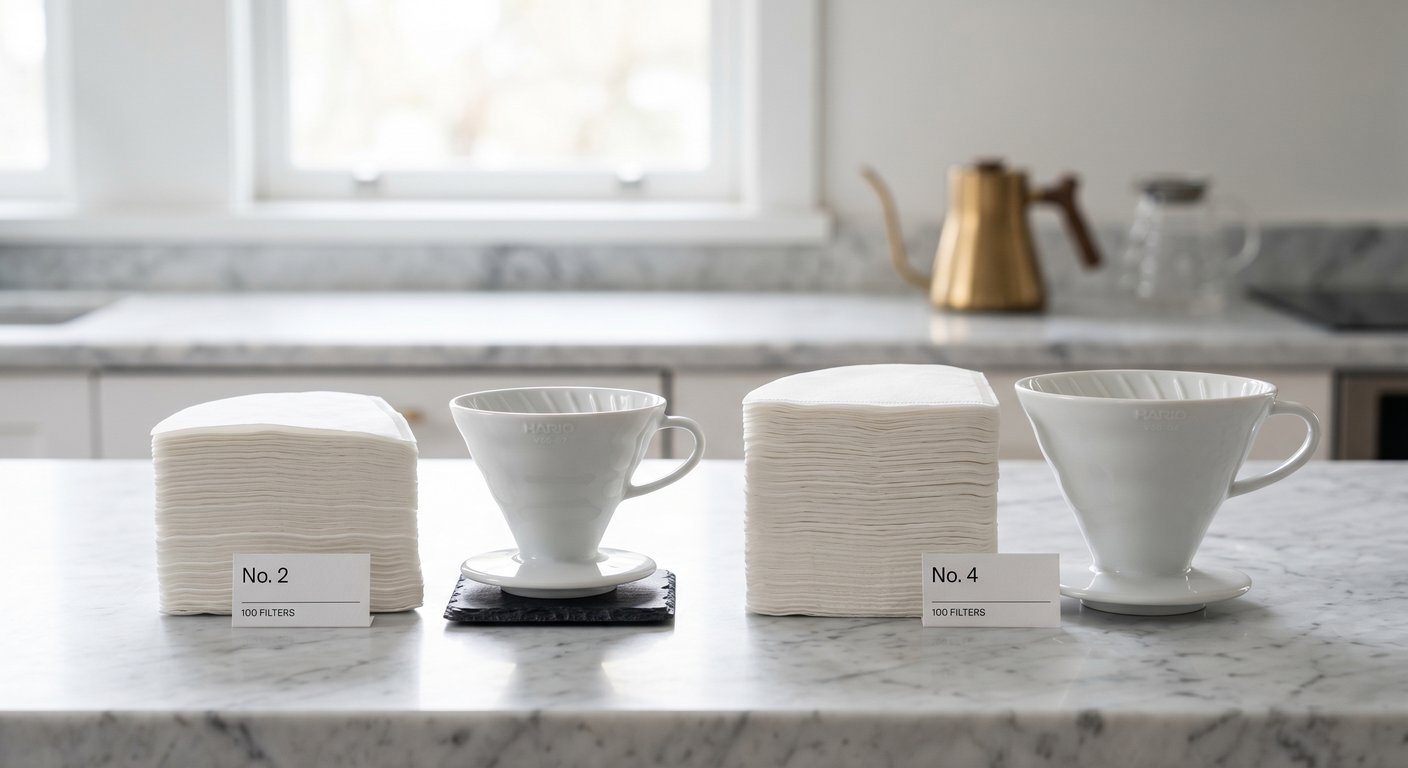
The numbering system commonly seen today (No. 1, No. 2, No. 4, etc.) was originally introduced by Melitta and has since been adopted widely across the industry. However, it is a common misconception that these numbers represent a strict global standard. In practice, the numbering corresponds roughly to the brewer’s cup capacity, while the cone angles and exact fold dimensions vary significantly between manufacturers.
For instance, a No. 2 filter from one brand may not perfectly seat in a dripper designed by another, as specific angles are dictated by the brewer design (such as the 60° angle of a Hario V60) rather than the filter number itself. Understanding these nuances is essential for uneven extraction or channeling prevention, where water finds the path of least resistance rather than flowing evenly through the grounds.