

Greaseproof vs Wax Paper for Hot Food: Heat & Breathability Guide
Oct 27, 2026

Premium Packaging Solutions

Retail & Food Bags
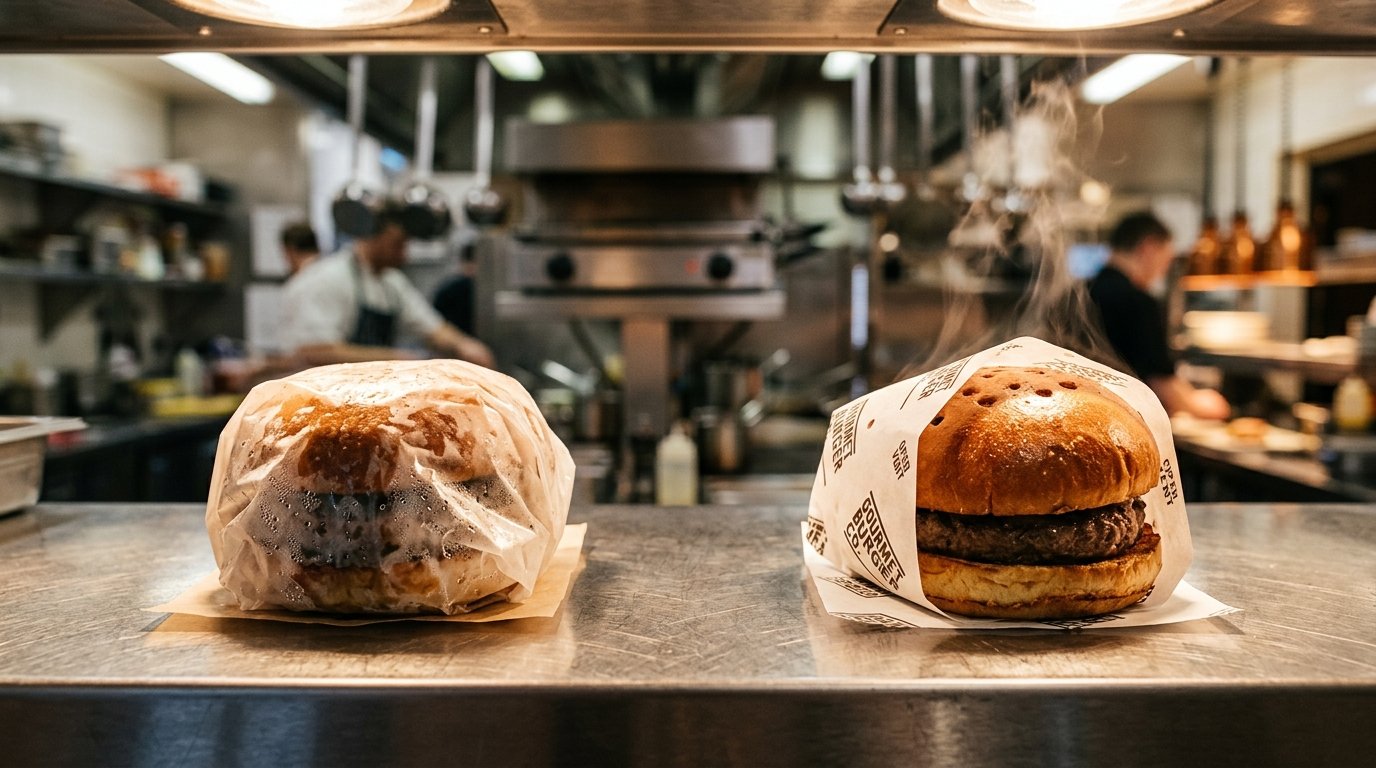
When evaluating greaseproof vs wax paper for hot food packaging, commercial kitchen managers and restaurant franchise buyers must carefully balance oil containment against steam breathability. Selecting the wrong paper for hot burgers, artisan sandwiches, or fried appetizers is a common procurement error that leads to melted chemical wax leaching onto food and steam condensation turning crispy buns into soggy, unappetizing messes.
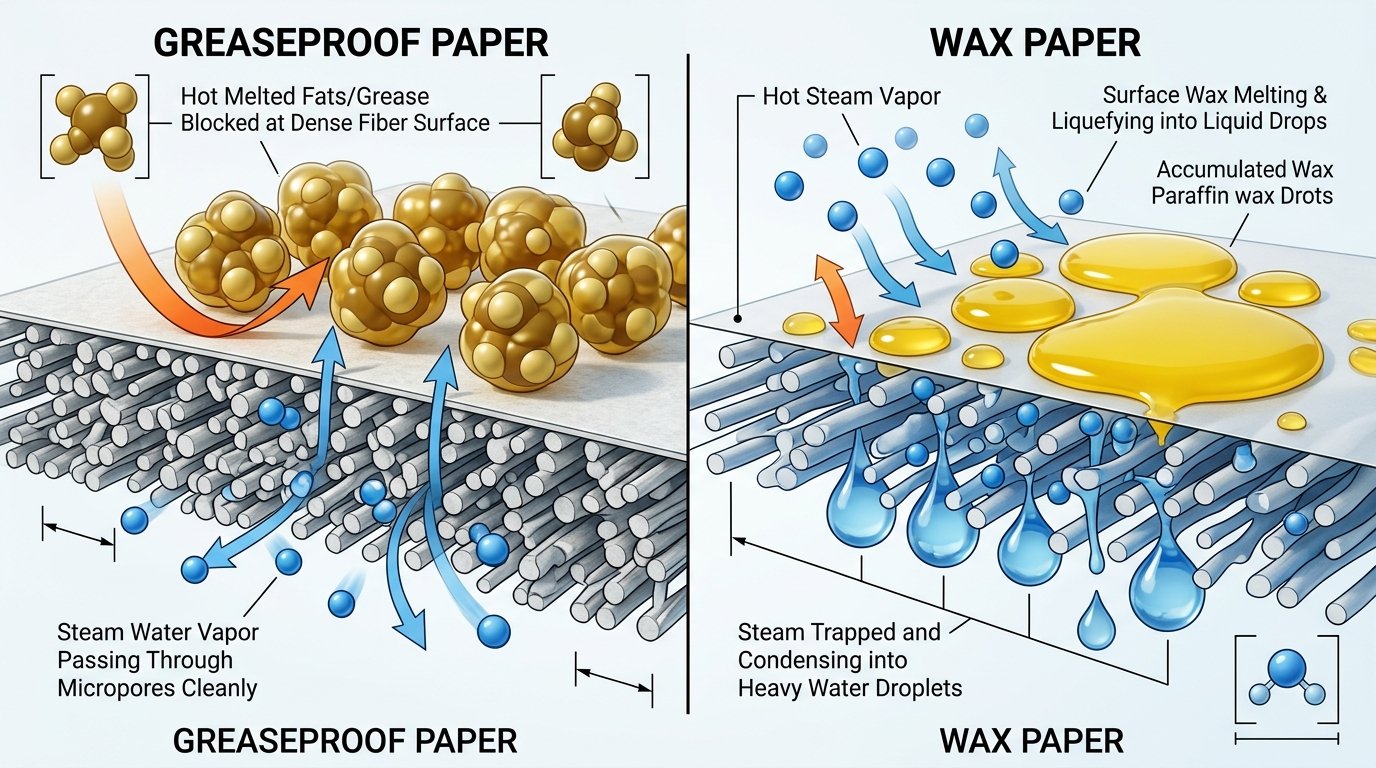
While both materials are commonly found in commercial kitchens, understanding the functional differences between greaseproof vs wax paper for hot food comes down to temperature limits and paper chemistry. True greaseproof paper uses tightly beaten cellulose fibers to withstand high heat while allowing moisture vapor to vent, whereas wax paper relies on paraffin coatings that melt rapidly under thermal stress.
The performance divergence between greaseproof paper and wax paper comes down to how their barrier properties are engineered during manufacturing:
[Greaseproof Paper] ➔ 100% Dense Cellulose Fibers + Supercalendering (Mechanical Barrier) ➔ Heat-Stable to 220°C + Breathable
                                                  VS.
[Wax Paper] ➔ Low-Density Base Paper + Paraffin/Soy Wax Coating (Surface Coating) ➔ Melts at 55°C–65°C + 100% Vapor OcclusionTrue greaseproof paper achieves its oil barrier through mechanical paper science rather than petroleum wax coatings. Virgin wood pulp is subjected to extensive, intensive refining (beating), hydrating the cellulose fibers until they form a dense, gelatinized slurry. When pressed and supercalendered under heated rollers, the fibers fuse together, eliminating microscopic void spaces.
Wax paper begins as standard, porous tissue paper that passes through a bath of molten paraffin wax, microcrystalline wax, or soybean wax (dry-waxing or wet-waxing).