


Greaseproof vs Wax Paper for Hot Food: Heat & Breathability Guide
Oct 27, 2026

Premium Packaging Solutions

Retail & Food Bags
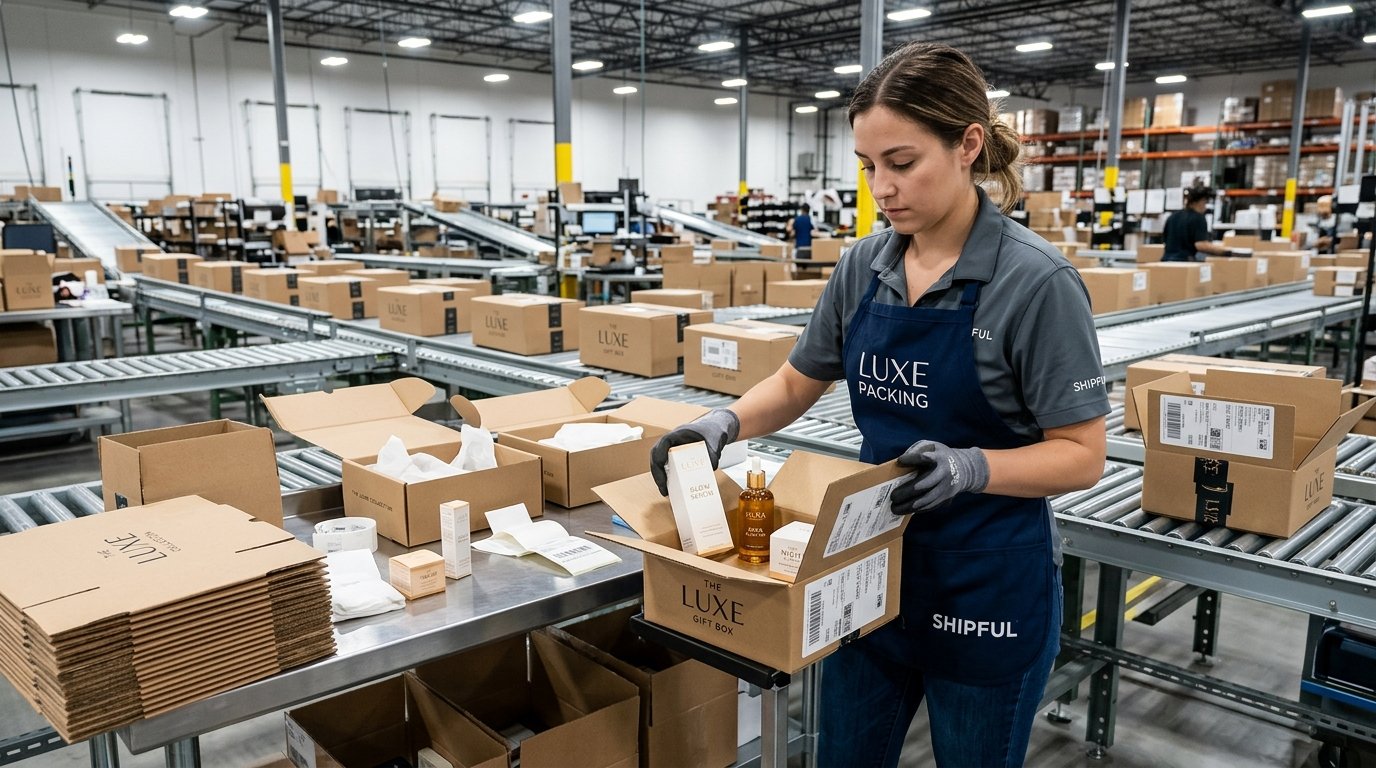
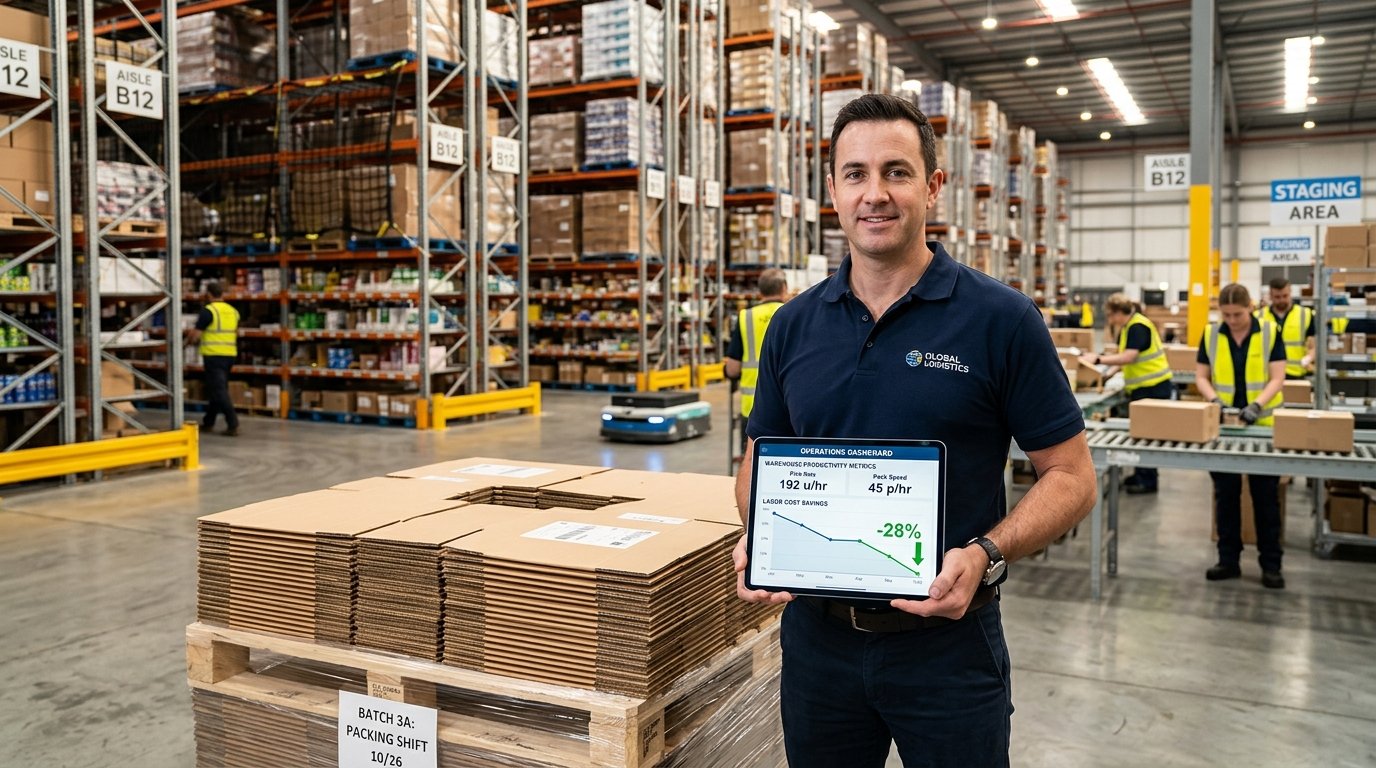
Analyzing and reducing custom box folding labor cost is one of the most effective levers for high-volume e-commerce fulfillment hubs, 3PL logistics providers, and contract packaging operations. While procurement managers routinely spend weeks negotiating fractions of a cent on raw carton prices, the minutes warehouse workers spend manually erecting boxes represent the true hidden expense in your supply chain.
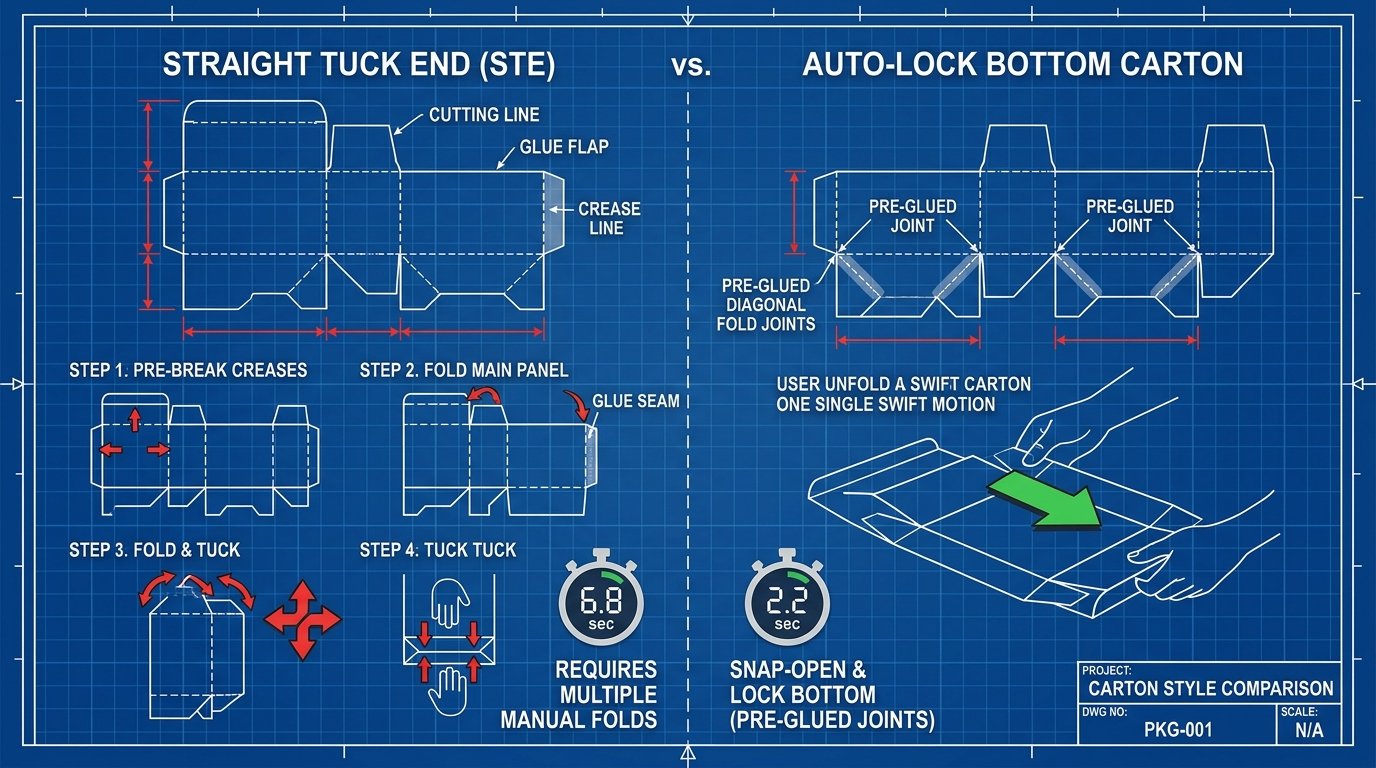
A carton that costs $0.21 to purchase but takes nearly 7 seconds of manual assembly on the packing bench is drastically more expensive than a $0.25 carton that pops open in one second. This real-world case study examines how a North American fulfillment center slashed custom box folding labor cost by 28.4% through structural carton re-engineering.
Before the intervention, the client fulfilled orders using standard Straight Tuck End folding cartons made from 350 GSM SBS paperboard.
On paper, the purchasing team believed they were minimizing costs: the STE boxes were priced at $0.21 per unit in container-load volumes. However, a forensic time-and-motion study conducted across 12 manual packing workstations revealed the true cost of assembly:
[Grab Flat STE Carton] ➔ [Squeeze & Square Tube] ➔ [Fold Minor Dust Flaps] ➔ [Tuck Major Bottom Flap] ➔ [Insert Product] ➔ [Tuck Top Flap]
                                            Total Time: 6.8 Seconds per Carton