


Corrugated Box Collapse During Shipping: ECT & Humidity Prevention Guide
Oct 01, 2026

Premium Packaging Solutions

Retail & Food Bags

Establishing a comprehensive packaging supplier audit checklist is the single most critical step for global procurement directors and consumer brands looking to eliminate catastrophic packaging defects before goods depart overseas factories. While importing custom cartons and paper packaging delivers massive economies of scale, relying on superficial third-party cosmetic inspections leaves your supply chain dangerously exposed to structural and mechanical line failures.
When imported cartons fail, they rarely fail because a CMYK shade was 2% off; they fail because improper fiber grain caused cartons to buckle under pallet pressure, incorrect score-line depth jammed high-speed packaging machinery, or defective adhesive seams split open in transit. To safeguard your brand, your packaging supplier audit checklist must evaluate the mechanical, physical, and chemical realities of industrial converting. Below is an insider’s guide to the seven critical parameters that most overseas inspection reports overlook.
[Material Caliper & Grain] ➔ [Scoreline Crease Recovery] ➔ [Glue Seam Adhesion & Aging] ➔ [Environmental Aging Chamber]Paperboard is an anisotropic material: its cellulose fibers align predominantly parallel to the movement of the paper machine (Machine Direction, or MD). Fibers are stiffest along the MD, while they fold more easily and uniformly across the grain (Cross Direction, or CD).
If a factory cuts die lines in the wrong grain orientation to maximize sheet yield and minimize paper waste:
When folding cartons run through high-speed automated erecting and filling machinery, fold resistance must fall within a strict milli-Newton (mN) window. If the die-cutting matrix scores paperboard too shallowly, the carton resists folding, causing the mechanical erecting arms to jam. If scored too deeply, the inner liner ruptures, causing white score-line cracking.
A comprehensive audit must verify that the factory uses a digital Crease and Board Stiffness Tester (CBT) to evaluate the 90-degree spring-back force of folded flaps.
Visual inspection of a pre-glued auto-bottom or side-seam carton cannot verify adhesive permanence. Budget converters frequently use low-solids water-based adhesives or substandard EVA hot-melts that form a weak mechanical cling rather than a true chemical fiber bond.
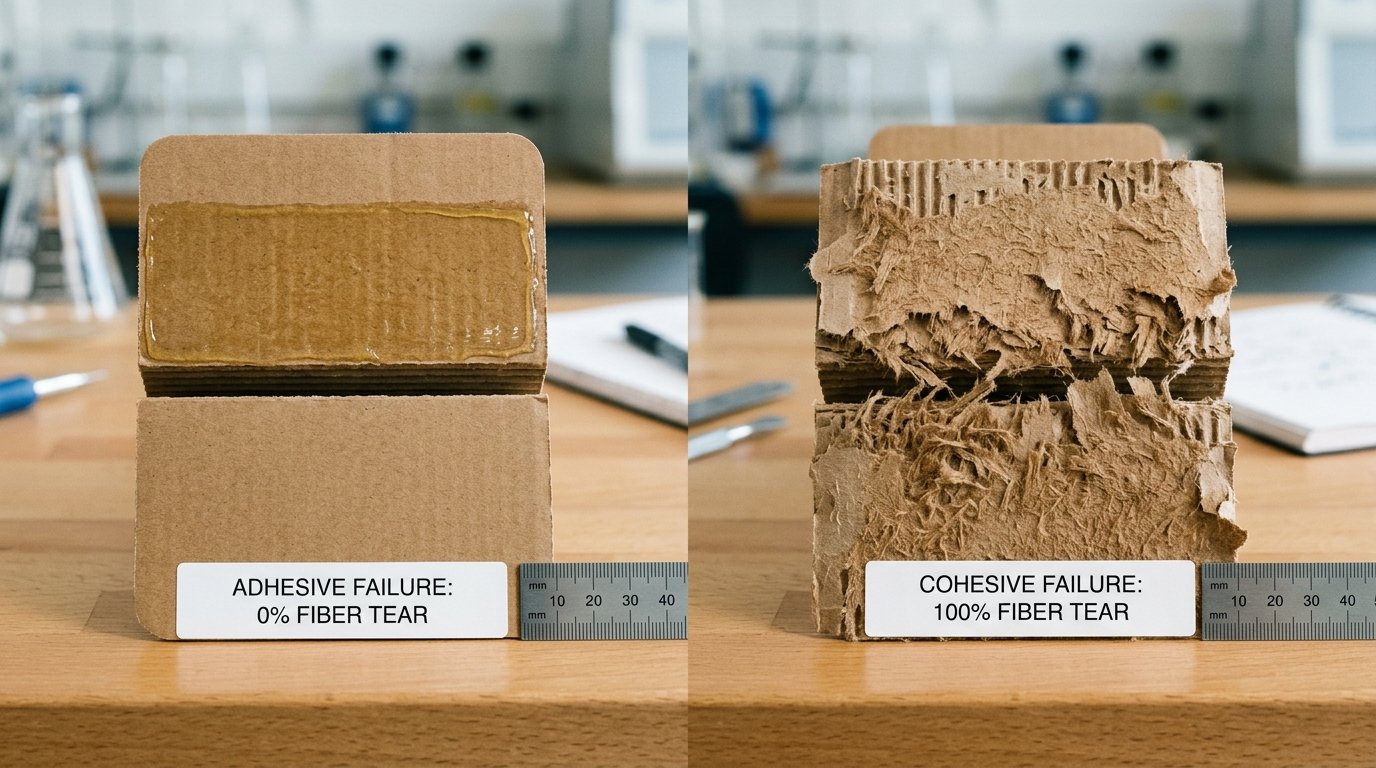
Ocean freight involves prolonged exposure to extreme temperature swings and high relative humidity (often exceeding 90% RH inside shipping containers). A carton that feels rigid on the dry factory floor in Dongguan can lose 50% of its edge crush resistance after crossing the Pacific.
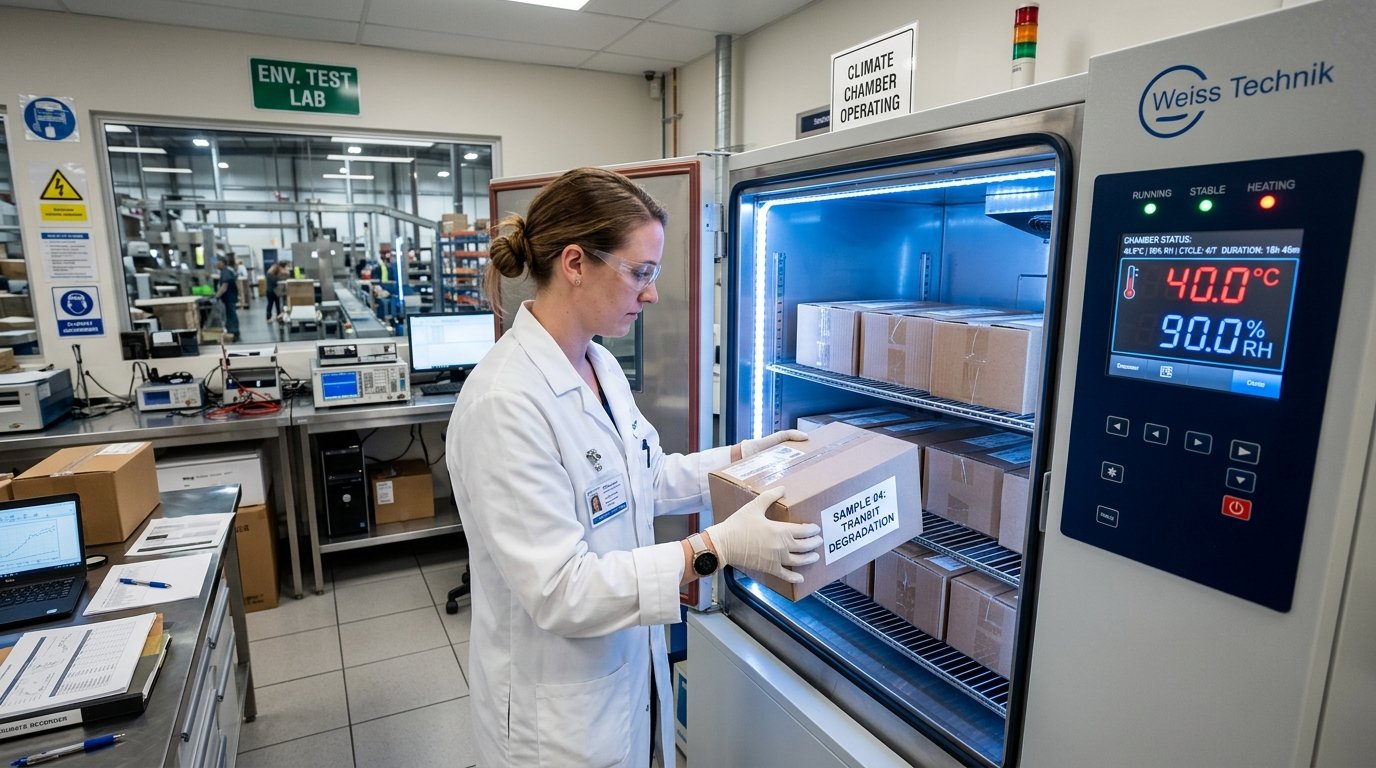
Insist that your supplier conducts an Accelerated Environmental Chamber Test (40°C at 90% RH for 72 hours) on production samples to evaluate carton delamination, coating bubbling, and moisture-induced warping.
Friction during ocean transit causes cartons to vibrate against each other inside master shippers. If UV coatings or varnishes lack sufficient slip additives or surface hardness, dark ink rubs off onto adjacent white panels, resulting in “scuff marring.”
Standard audits only wipe the print with a dry finger. Your audit checklist should mandate a standardized Sutherland Ink Rub Test (ASTM D5264) utilizing 4-pound test weights for 50 strokes.
In folding cartons, a 0.5 mm variance in die-to-print registration can mean the difference between a secure lock and a box that pops open under its own product weight. Inspectors must measure flap cutouts, tongue locks, and dust flap clearances against CAD dielines using optical digital calipers, rather than estimating fit by hand.
For food boxes and pan liners, visual inspections tell you nothing about toxic volatile residues. Audits must review batch-specific laboratory testing verifying compliance with FDA 21 CFR 176.170, EU Regulation (EC) No 1935/2004, and third-party certified PFAS-Free fluorine assays.