

Corrugated Box Collapse During Shipping: ECT & Humidity Prevention Guide
Oct 01, 2026

Premium Packaging Solutions

Retail & Food Bags
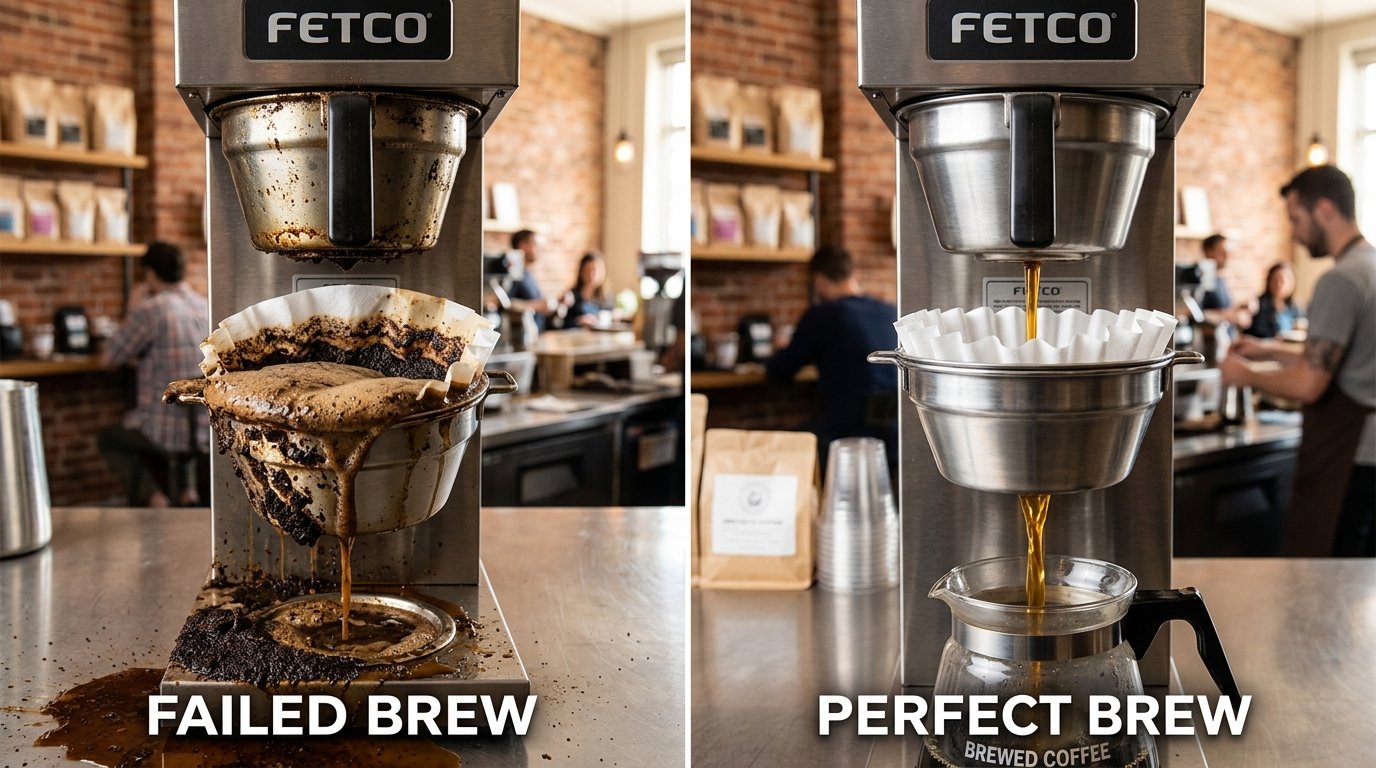
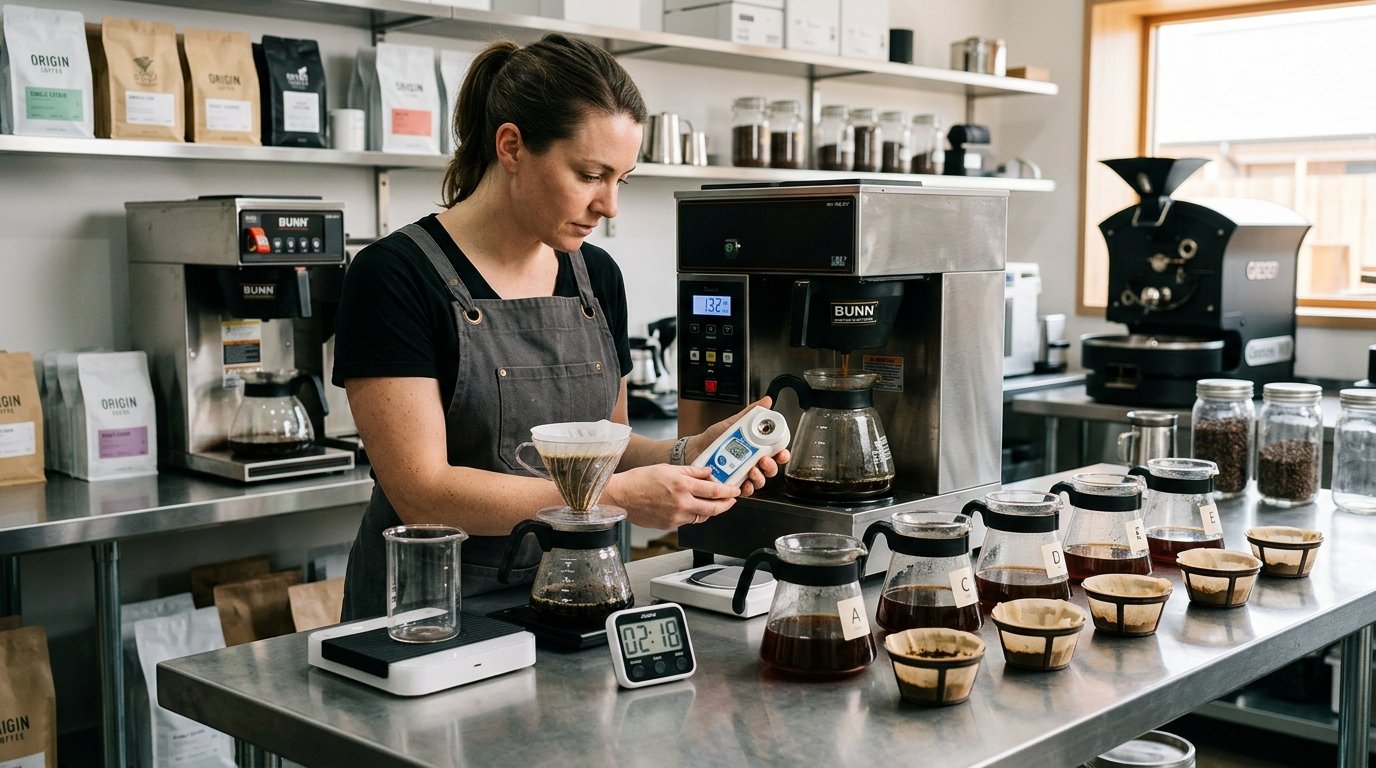
In commercial batch brewing, identifying the primary coffee filter clogging causes is vital to preventing brew basket overflows, severe over-extraction, and ruined morning beverage service. When a multi-gallon commercial brewer stalls mid-cycle, the kitchen or cafe staff faces messy cleanup, wasted specialty roasts, and harsh bitter flavors in the cup.
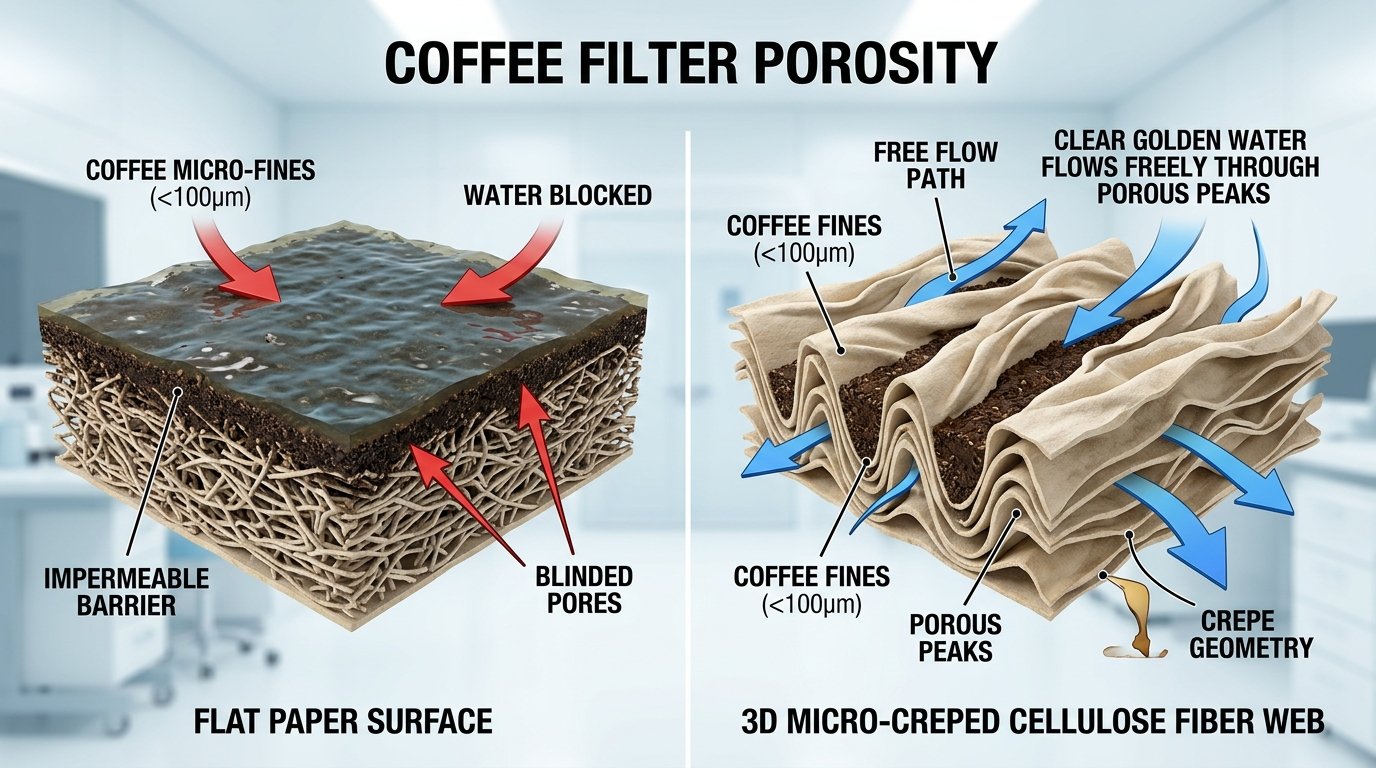
While many baristas immediately blame grinder burrs when encountering brew basket stalling, an engineering analysis of coffee filter clogging causes demonstrates that paper fiber morphology, wet-strength resin chemistry, and hydraulic pore blinding are the true driving factors.
To diagnose why a commercial coffee filter chokes mid-brew, we have to look at what happens inside the saturated bed of ground coffee during coffee extraction.
When hot water (typically 92°C to 96°C / 198°F to 205°F) saturates the coffee bed, soluble solids dissolve, carbon dioxide degasses, and insoluble coffee cell-wall fragments—known in sensory science as “micro-fines” (particles < 100 microns)—are suspended in the liquid stream.
Under hydrostatic pressure, gravity draws these suspended fines downward toward the filter substrate. This creates three distinct flow bottlenecks: