

Corrugated Box Collapse During Shipping: ECT & Humidity Prevention Guide
Oct 01, 2026

Premium Packaging Solutions

Retail & Food Bags
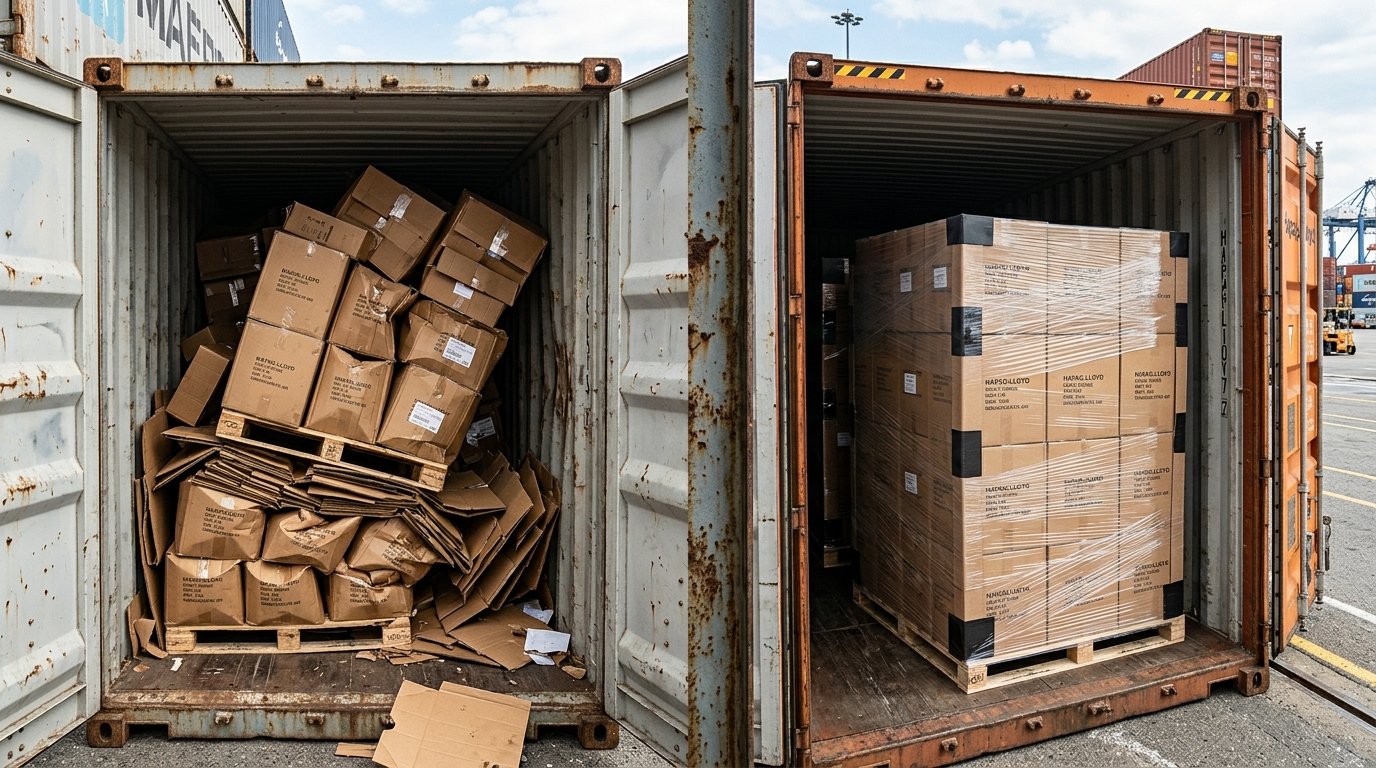
📸 [Insert Image 1 Here: Refers to “Image 1” in Part 3]
Preventing corrugated box collapse during shipping is one of the most critical challenges facing international importers, supply chain directors, and cross-border brand owners. Opening an ocean shipping container at a destination port only to discover leaning pallets, crumpled carton walls, and crushed bottom-tier inventory results in devastating financial write-offs and logistics disputes.
When freight forwarders and overseas brands report corrugated box collapse during shipping, the blame is almost invariably directed at “rough cargo handling” or “bad forklift drivers.” While transit shock is a reality, forensic packaging engineering reveals that the vast majority of shipping collapses are silent, progressive structural failures caused by moisture absorption, environmental creep, and underestimated dynamic safety factors.
A corrugated shipping container that easily withstands a static compression test on a dry factory floor in southern China will face radically different physical conditions during a 30-day ocean transit across the Pacific or through the Suez Canal.
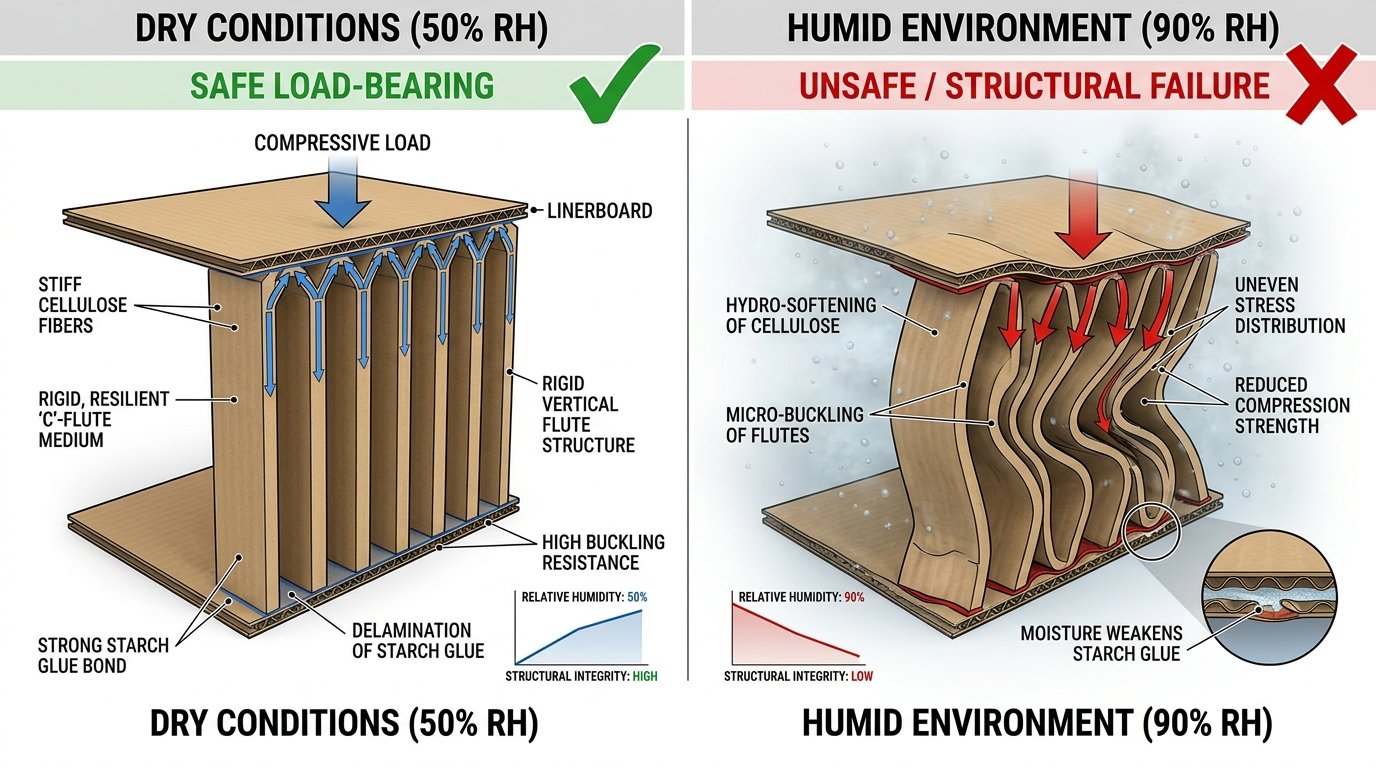
Corrugated fiberboard is manufactured from hygroscopic cellulose fibers that naturally equilibrate with ambient relative humidity (RH). In an enclosed shipping container crossing tropical waters, humidity levels routinely swing between 85% and 98% RH, creating a phenomenon known in marine logistics as “container rain.”
As paper absorbs moisture from the humid ocean air, its mechanical properties degrade following non-linear exponential curves:
[Ambient Moisture Absorption (8% ➔ 16% Paper Moisture)]
                    ▼
[Softening of Hemicellulose & Inter-Fiber Hydrogen Bonds]
                    ▼
[Micro-Buckling of Corrugated Flute Walls (ECT Loss > 45%)]
                    ▼
[Static Creep Under Pallet Weight ➔ Catastrophic Box Collapse]The structural backbone of any shipping carton is its Edge Crush Test (ECT) value—the measure of vertical compressive strength along the flutes. At standard laboratory testing conditions (23°C / 50% RH), standard paperboard maintains an equilibrium moisture content of approximately 7% to 8%.
When container humidity climbs to 90% RH, paperboard moisture content surges to 14% – 18%. Every 1% increase in paper moisture content above 8% reduces ECT by approximately 8% to 10%. In tropical ocean freight, standard untreated corrugated board loses 40% to 55% of its original compressive strength before the ship even docks at the destination terminal.
Many procurement teams calculate box strength using basic static formulas: dividing total top weight by box count. This ignores the dynamic reality of maritime transport.
A container vessel rolling in heavy seas subjects cargo to vertical accelerations of 1.5G to 2.0G. When combined with long-term storage duration (fatigue creep) and humidity, the static safety factor must be adjusted upwards:
$$text{Required Compressive Strength (BCT)} = text{Dead Weight} times text{Safety Factor} (F_s)$$
While domestic trucking requires a safety factor of $3.0$, long-distance ocean shipping demands an empirical safety factor between $4.5$ and $5.5$. If your cartons were specified with a domestic safety factor of $3.0$, they are mathematically guaranteed to buckle under humid marine transit.