


Unbleached Kraft vs White Food Paper: Branding & Factory Guide
Oct 15, 2026

Premium Packaging Solutions

Retail & Food Bags
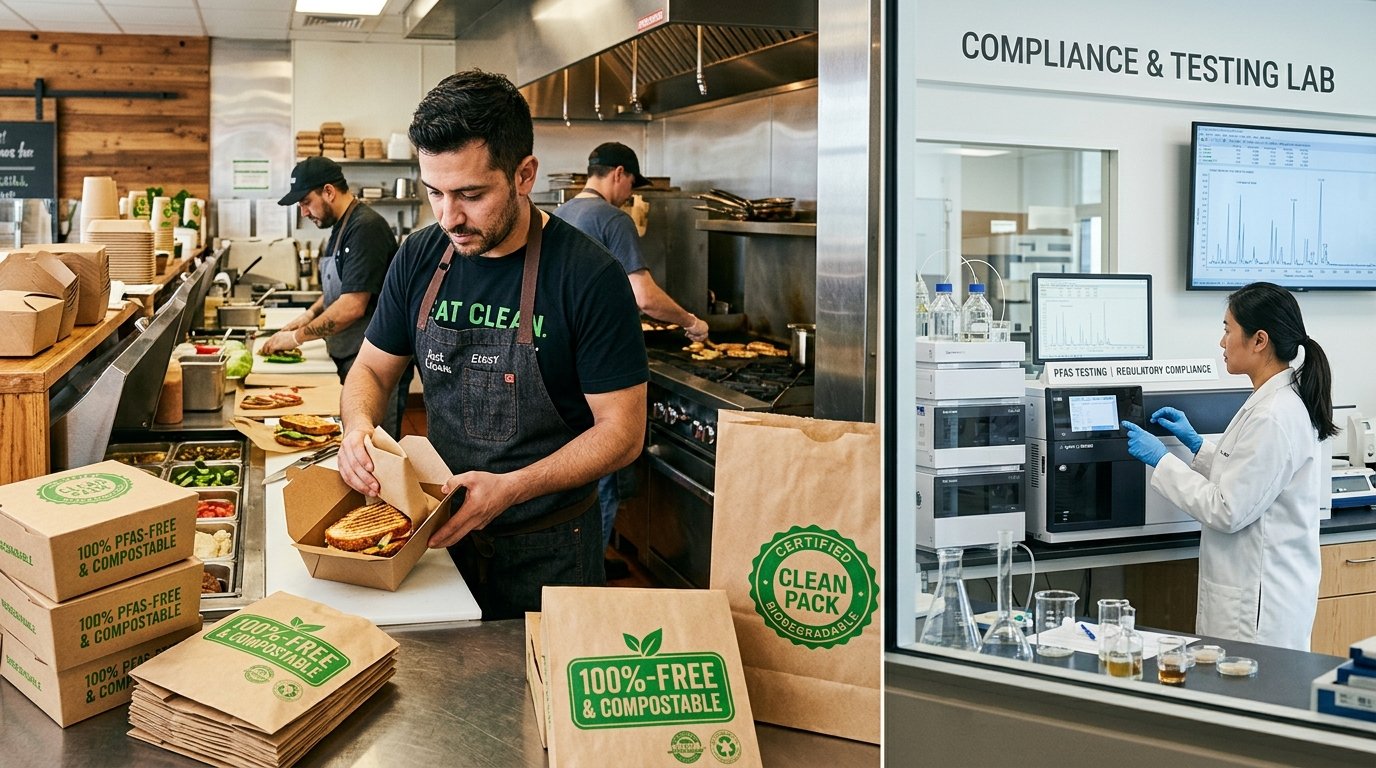
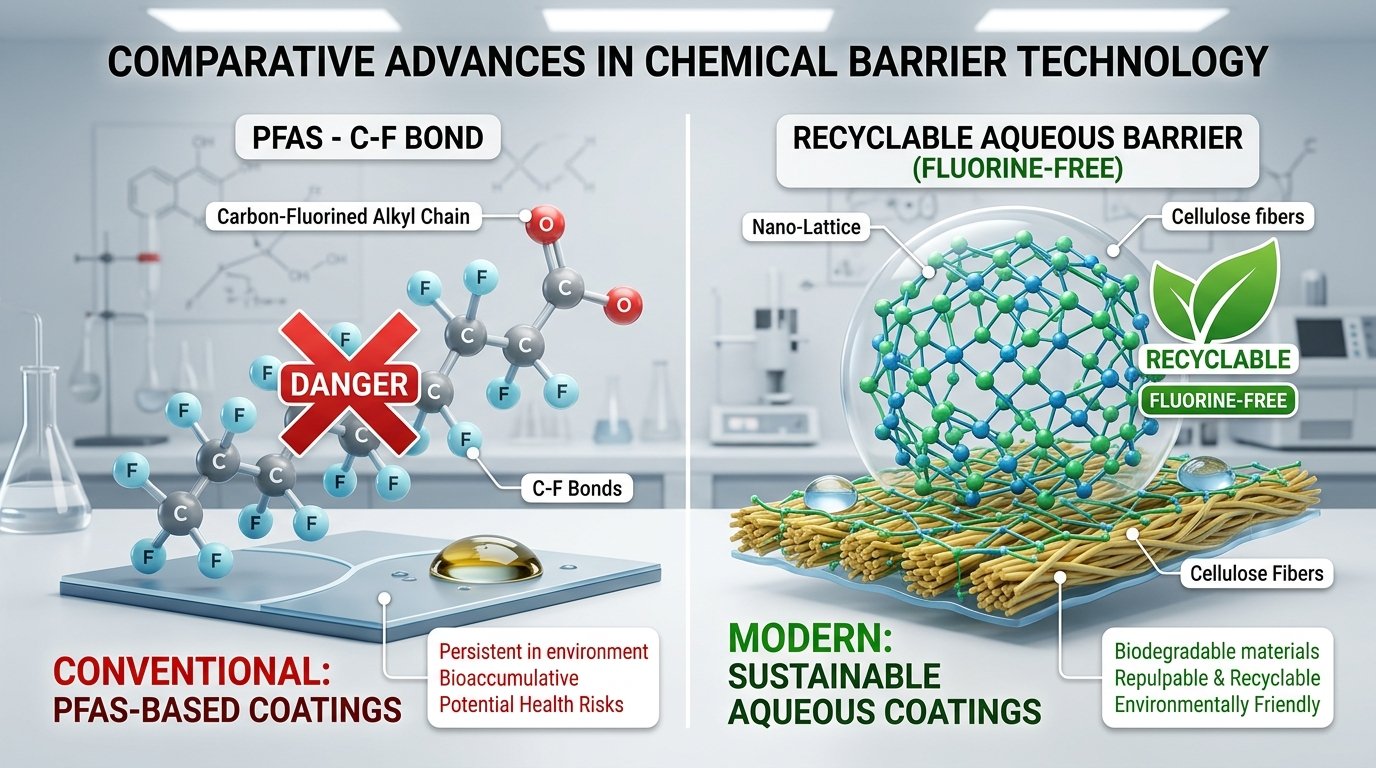
Complying with upcoming pfas regulations food packaging 2026 mandates has become the top priority for quick-service restaurant (QSR) chains, commercial bakeries, and packaging importers worldwide. As global environmental authorities enforce sweeping statutory bans on “forever chemicals”, food brands must urgently replace fluorinated barrier coatings with certified non-toxic, plant-based alternatives to protect consumer safety and maintain market access.
For decades, the global packaging industry relied heavily on per- and polyfluoroalkyl substances (PFAS) to achieve grease and oil resistance in burger wraps, fry boxes, and baking sheets. However, escalating public health research linking PFAS bioaccumulation to severe long-term illness has triggered an unprecedented regulatory crackdown. Understanding the exact requirements of pfas regulations food packaging 2026 is essential for avoiding catastrophic port rejections and heavy compliance penalties across North America and Europe.
Navigating global PFAS legislation requires understanding the divergence between regional enforcement mechanisms:
[North America: State Bans & FDA Phasing] ➔ [European Union: PPWR & Universal Restriction] ➔ [Factory Testing & Sourcing Transition]While federal action under the US FDA resulted in voluntary agreements from chemical manufacturers to eliminate grease-proofing substances containing certain short-chain PFAS (such as 6:2 FTOH), individual states have enacted strict statutory bans with total organic fluorine (TOF) thresholds:
The EU’s sweeping Packaging and Packaging Waste Regulation (PPWR) enters full operational force in 2025–2026, introducing a targeted, hard-line ban on all food-contact packaging containing PFAS above stringent analytical detection limits:
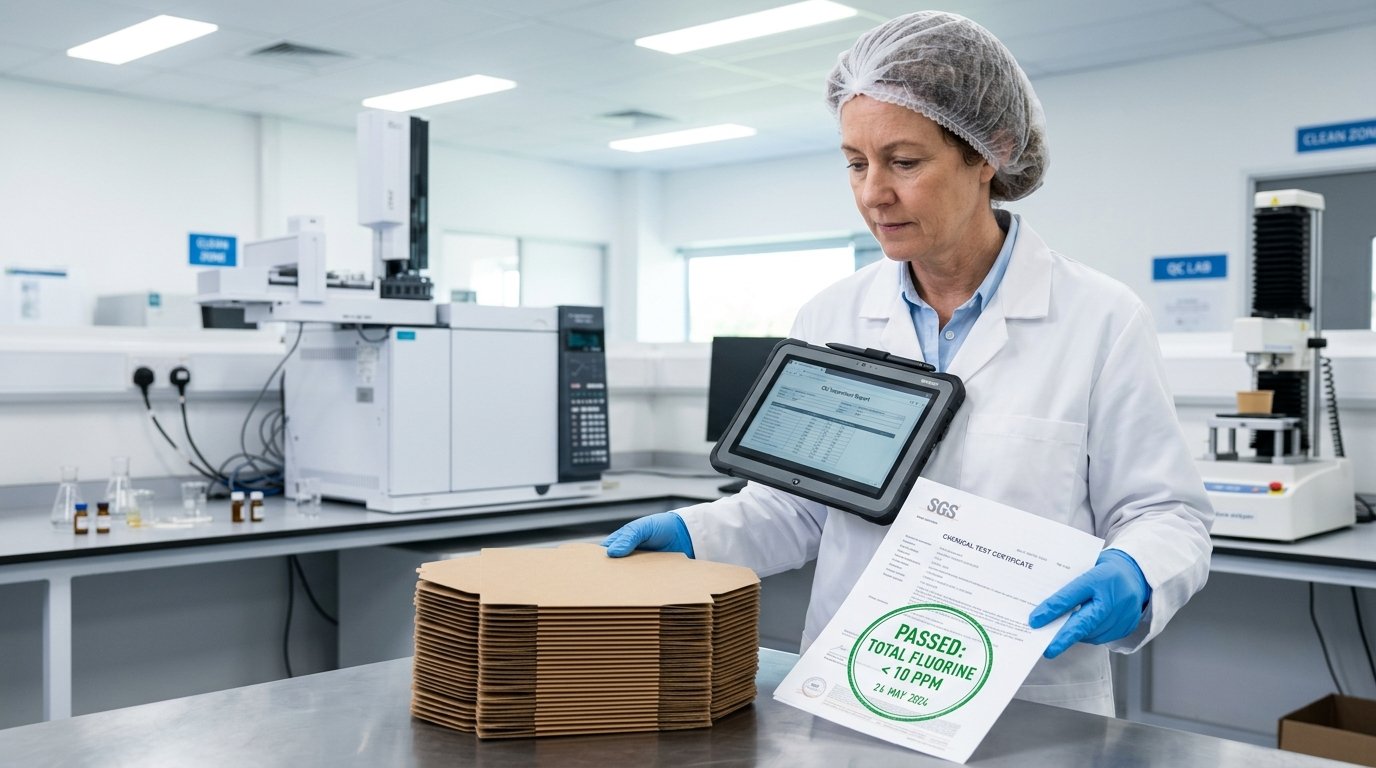
Any exporter shipping food products into the EU single market after the 2026 cut-off without verified third-party laboratory fluorine screening will face immediate product withdrawal at customs.