
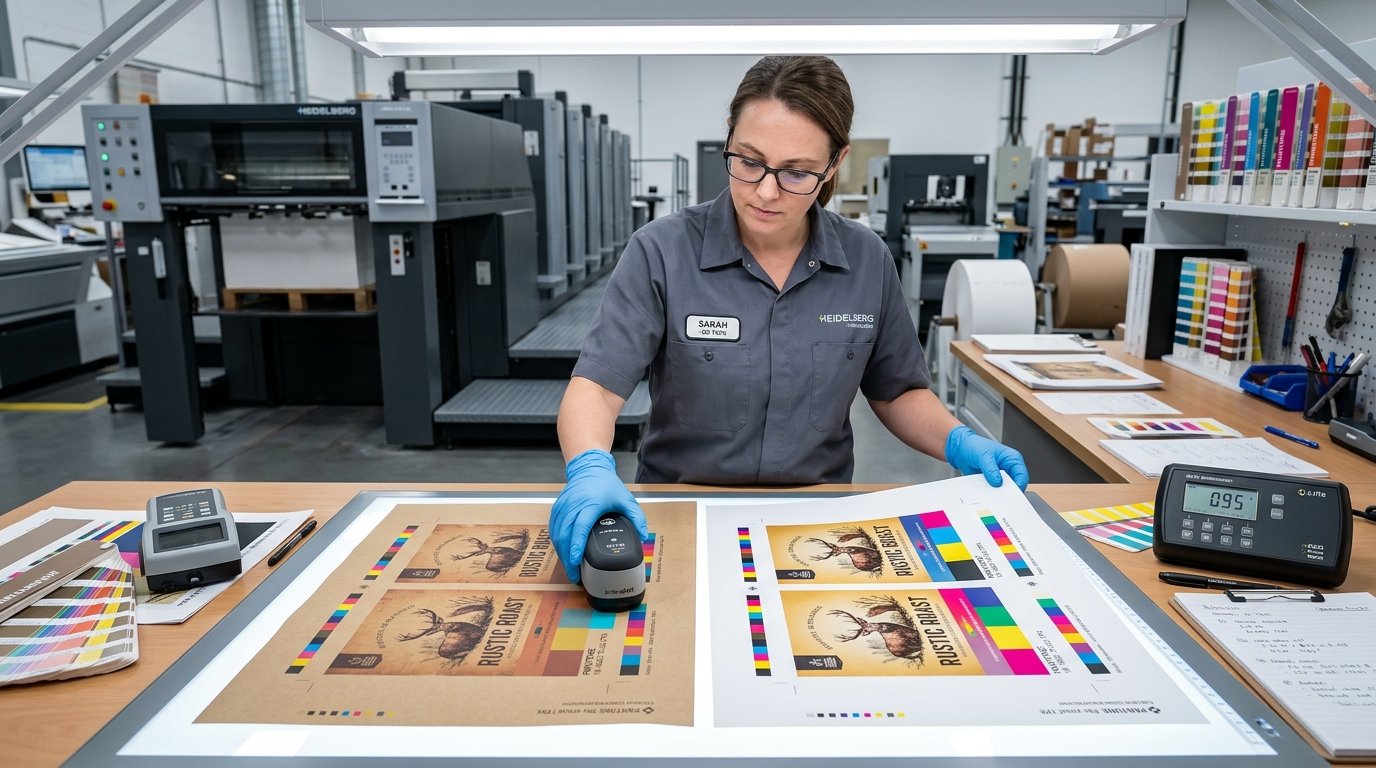

Unbleached Kraft vs White Food Paper: Branding & Factory Guide
Oct 15, 2026
Premium Packaging Solutions

Retail & Food Bags
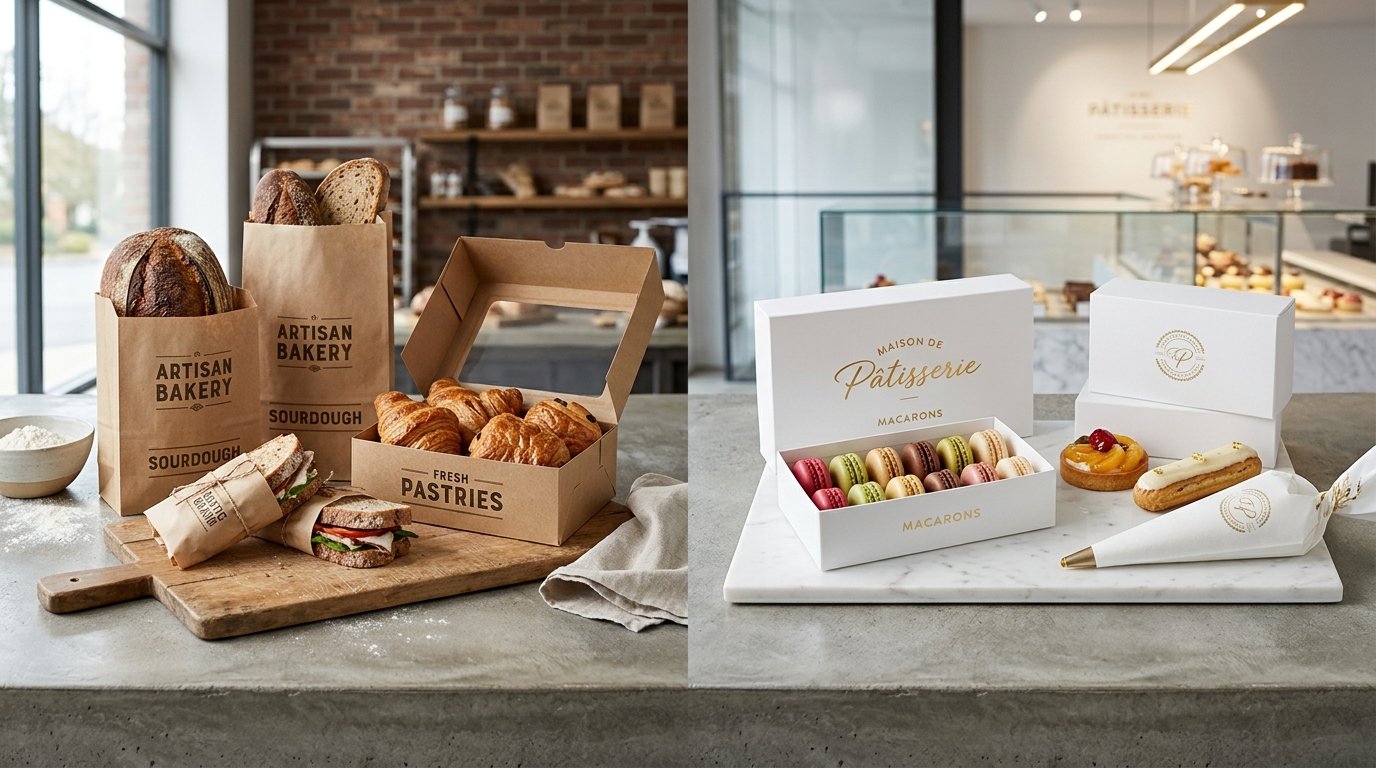
When a food brand or quick-service restaurant (QSR) revamps its packaging, the visual foundation begins with a deceptively simple choice: unbleached kraft vs white food paper.
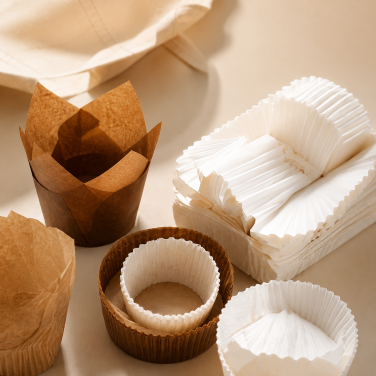
Over the last decade, brown unbleached kraft has surged across artisan bakeries, gourmet burger chains, and specialty cafes. To modern consumers, the natural earthy brown tone represents clean food, environmental responsibility, and farm-to-table authenticity. In contrast, bleached white paper is often stereotyped by consumers as “processed” or “industrial,” even while luxury confectionery and fine dining establishments continue to rely on crisp white substrates for clinical elegance and vibrant color reproduction.
For packaging engineers and procurement directors, however, this decision extends far beyond aesthetic trends. Base paper color fundamentally influences fiber tensile strength, ink color shifts, grease barrier chemistry, and overall converting costs.
To understand how unbleached kraft differs from bleached white food board, we must examine the chemical converting process inside the pulp mill:
Raw Wood Chips (Lignin + Cellulose) ➔
Sulfate Kraft Cooking ➔
Brown Virgin Pulp (High Lignin)]
                    │
      ┌─────────────┴───────────────────────────────────────────┐
      ▼                                                         ▼
Unbleached Natural Kraft                 Multi-Stage Oxygen/Chlorine-Free Bleaching
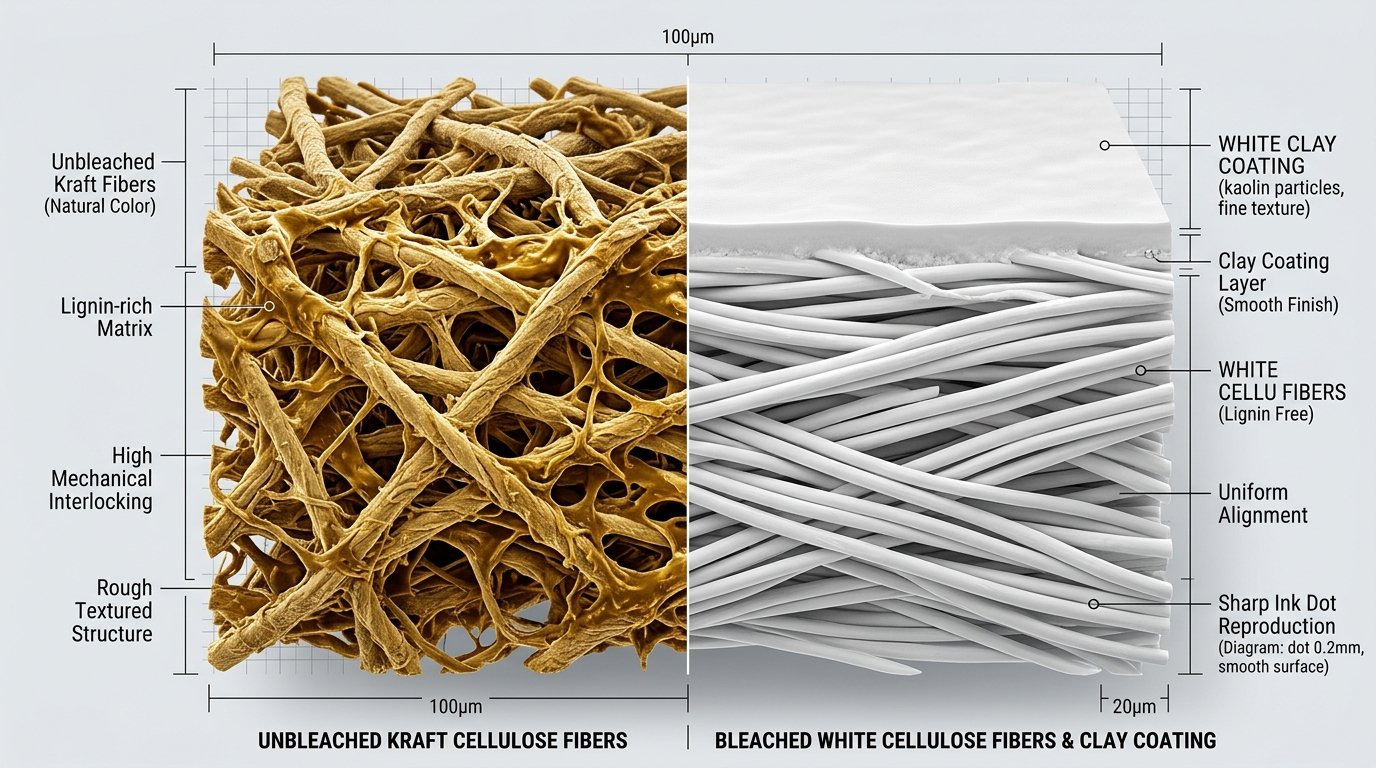
- Preserves virgin lignin bonds           - Lignin chemically dissolved & washed away
- Higher tear and burst strength          - Pure white cellulose matrix (>88% ISO Brightness)
- Natural earthy tan hue - Superior print substrate, slightly lower stiffnessDuring standard kraft pulping, wood chips are cooked with sodium hydroxide and sodium sulfide (“white liquor”) to break down lignin. In unbleached kraft, cooking stops as soon as the fibers separate. The natural wood polymer lignin remains embedded in the pulp matrix.
To produce bleached paper, raw brown pulp undergoes multiple chemical bleaching stages (typically Elemental Chlorine Free / ECF with chlorine dioxide, or Totally Chlorine Free / TCF utilizing oxygen, ozone, and hydrogen peroxide).